
“Unwrapped” for the holidays, Genesee gets an early gift of the legendary Shaun Cassidy
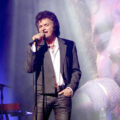
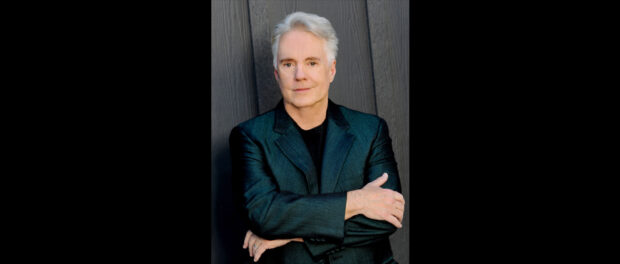 Photo provided by Keith Munyan
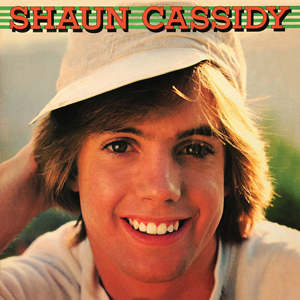
As a mere high schooler, Shaun Cassidy was one of the most prominent pop stars on the planet, responsible for originating or remaking the singles “That’s Rock N’ Roll,” “Hey Deanie,” “Da Doo Ron Ron” and “Do You Believe in Magic,” all while starring on television’s “The Hardy Boys Mysteries” throughout the 1970s.
After revamping his teen idol image by working with super producer/artist Todd Rundgren on 1980’s “Wasp,” the multi-talented performer turned to Broadway, followed by creating, writing and producing a number of top-rated series, including “American Gothic,” “Roar,” “Cold Case,” “Cover Me,” “The Agency Invasion,” “Emerald City” and “New Amsterdam.”
Nowadays, the 68-year-old legend is back to singing following a nearly four-decade hiatus, bringing a brand new show, “Unwrapped: Songs & Stories For The Holidays,” to the Genesee Theatre on Friday, November 13, alongside the singles “My Christmas Movie” and “Christmas In Danceland,” freshly pressed together on vinyl.
Cassidy called Chicago Concert Reviews to chat all about the comeback, plus what it was like growing up in the acting family of Jack Cassidy (Broadway’s “She Loves Me”) and Shirley Jones (“The Partridge Family”), having parallel showbiz experiences with half-brother and late actor/singer David Cassidy, that random time The Who’s Keith Moon crashed on his couch and eventually unplugging from the spotlight for numerous other entertaining opportunities.
How would you describe the “Unwrapped” Tour you have coming to the Genesee Theatre?
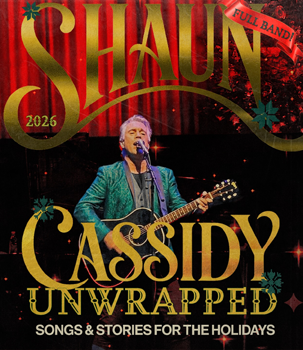 Shaun Cassidy: It’s a story-driven show that incorporates old Christmas songs, new Christmas songs, lots of my hit songs and songs I’ve had over the years. There’s a lot of stories about the holidays, my experience with my parents, my experience with my brothers, my kids and with the audience that will be there. Hopefully they will bring their families because it’s a multi-generational experience. It’s got a beginning, a middle and an end, almost like a Broadway show.
What comes to mind when you think of performing around Chicagoland?
Cassidy: Well, my early shows in Chicago. I loved playing Chicago. I remember playing on the dock there at [Chicago] Fest and I played the old basketball arena [Chicago International Amphitheatre] back in the day. I also have gone to Chicago over the years working in the theater. I did kind of a comeback show on “Oprah” actually, in Chicago when she was there. I love Chicago. It’s my favorite city.
Give us a sneak preview of your new double-sided single.
Cassidy: They’re going to be released on all the streamers on November 1 and I’ve made a green vinyl 45, which we’re gonna have available at the shows…I couldn’t find some Christmas songs to support some stories I wanted to tell, so I ended up writing them. I found that last year when I was on the road, I’d written a couple of new songs and the audience really liked them, so I went back and did it again this time. These are two new songs. One is a song called “My Christmas Movie,” which is about the general feeling of longing I think everyone has at Christmas. You’re longing to be home. You’re longing to be with family. Maybe you’re longing to be with the person you love. There’s a guy who’s longing for this woman he loves and she’s not with him, so he writes this movie in his head about what might happen should she come back to him on Christmas Eve. And “Christmas In Danceland” is an old throwback, like a Motown record, cause I wanted a great dance song to play in the show. It’s kind of a novelty story about a very bad dancer, like me, who ends up alone in a disco on Christmas Eve. Lo and behold, Santa shows up and complications ensure. It’s fun.
Going back to the very beginning, what was it like growing up in such a famous family?
 Cassidy: I don’t really have any other reference and I’m not even sure I realized my parents were famous until I was 10 or 11. I knew that people were really nice to them (laughs) when we would go out in the street, but I’m not really sure I knew why. But when I found they were in movies, on Broadway or television, [I thought], “Oh, that’s interesting. It’s different.” I feel like I ended up being kind of like the journalist watching that experience as a kid. The fact that I’m a writer now is probably telling because I don’t have a great deal of respect for celebrity and I do really respect accomplishment.
These days, it’s very easy to be famous, but you don’t necessarily have had to accomplish anything to do it. You can just be an influencer on Instagram or TikTok. But to actually create something that’s lasting, be well-known and have whatever level of celebrity you have for that feels like the real deal. My parents both had that. Whenever I mention my mother to people, they treat her like she’s the Statue of Liberty. She’s just beloved and it’s really nice, makes me very proud.
How did you wind up beginning your professional recording career while you were still in high school?
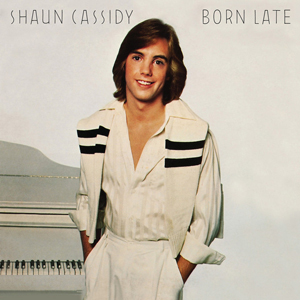
Cassidy: I was in bands all through high school. I was in a punk band and I played at clubs on Sunset Boulevard when I probably wasn’t even old enough to be in there. I don’t know word got out, but because I came from a family of well-known people, people are interested in me, so they came out and saw me. A guy named Mike Curb ended up signing me to a recording contract when I was 16. Their idea was I would record songs and release them exclusively in Europe, and if I could have a hit in one European market, Germany, or in my case, I had a number one in Australia, then they could bring the record back to America and maybe break through the 50 or 100 new singles that came out every week. But all of that plan was kind of thrown out cause the day I graduated from high school, I went on an acting audition and I got this show called “The Hardy Boys.” When “The Hardy Boys” came on, Warner Brothers threw those singles together in an album and released it. It went on to become the biggest selling solo debut in history until Whitney Houston came along and took that crown a few years later, but it was a very big opening act for me. I didn’t really foresee that happening.
What did you take away from your time playing the part of Joe Hardy?
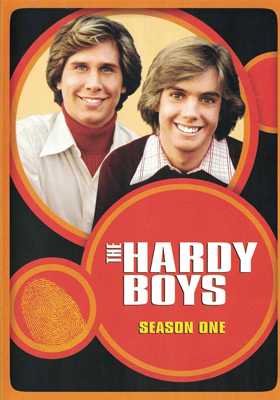 Cassidy: That was fun because I love Parker Stevenson, the guy who played my brother [Frank]. He’s still a good friend. We just had a lot of fun. Every week we’d get to go to some exotic locale and do some exotic thing. I learned to hang glide on that show. I learned to surf on that show. I learned how to fall through a disappearing floor on that show and be chased around by monsters like Scooby-Doo. We often had a new girlfriend every week and that wasn’t so terrible either when you’re 18 or 19, so it was just a great job. I have no regrets about that.
Between the music and show, can you fill us in about your level of fame throughout the ’70s?
Cassidy: This is not going to sound humble, but it was an enormous. I’m not saying it was deserved, but that’s what happened. I couldn’t go anywhere for a long time. I think part of that experience too is what made me want to write because writing felt like a way of maintaining creativity without having to sacrifice so much of your life. When you’re that famous, you can’t go anywhere and you become kind of locked in your house, having watched my brother David go through a variation of that experience, having watched Michael Jackson go through that experience. My record was number one the day Elvis [Presley] died and a lot of people called me that day from press. “The ‘King is gone and you’ve gotta a record now. How do you feel?” And I’m thinking, “If that life kills you at 42, maybe I don’t want that life.”
How did you feel about being categorized as a teen idol at the time?
Cassidy: Well, you just said it. It’s a category and everybody wants to put you in some lane, so if you’re a teenager and you have kids who are your fans, they call you a “teen idol.” A teen idol is not really a job (laughs). It’s not a career either. “Teen idol” by its very nature has a short shelf life, but I never viewed myself as a teen idol. I just viewed myself as a kid who got a TV show and had some records, who happened to be a teenager. The fact that young people liked the records, liked the television show is great. Now those people are older and they still seem to like my shows, which is nice, so yeah, whatever. I say this to my kids, “You are never what anybody calls you. You are what you’re doing and process is everything, especially in creative endeavors because you have no control of outcome.” Every show I make, I have no idea if it’s going to be a hit, but I better enjoy making it or why do it? I loved doing “The Hardy Boys.” I thought I was an actor on that show and they call you a “teen idol”? Okay, you’re a teen idol until you’re not.
In what ways did your music evolve, especially when you worked with Todd Rundgren on the “Wasp” album and took a completely different turn?
Cassidy: It was a dramatic turn, but it was actually a throwback cause, again, I had been in a punk band in high school. When I got “The Hardy Boys,” they said, “You can’t make those punk records. The kids aren’t gonna like those.” So I said, “okay” and I ended up doing like power pop records, which were kind of a throwback to the ’60s. My first song was a song that Phil Spector co-wrote called “Da Doo Ron Ron” and then Eric Carmen, who had been in The Raspberries, a big power pop band, [wrote “That’s Rock N’ Roll” and “Hey Deanie”]. I liked that sound and I thought I could make records like that. That would fulfill me and might appeal to the kids that were watching the show or buying the records.
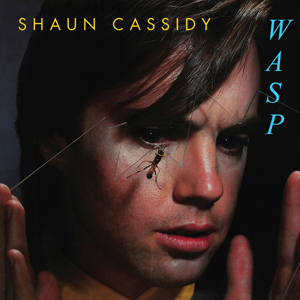 That’s what I did on the early albums, but as I got a little older, I wanted to push the boundaries further and I did. The record with Todd was basically like an acting exercise. I played a lot of characters in the songs. I changed my voice from song to song fairly dramatically and I think about eight people bought that album. It was not well-received by the kids who had been buying my pop records, but that was okay because it was something important for me to do, and ironically in the last few years, a lot of people said they really liked that record, but they had to maybe grow up a little bit too.
What led you to transition out of music and onto Broadway, then writing for television?
Cassidy: I got married at 21, which was kinda crazy as it turns out and I had kids fairly young. I played the Houston Astrodome [in front of] 55,000 people, said “goodnight” and didn’t know I wouldn’t do another show for 40 years, but that’s the way it went because I started working in the theater. I worked around the country and I worked over in London, the West End. I got to work with playwrights and I learned about writing a lot from them, so I started writing myself in my late ’20s.
I was really into writing deep and I was selling scripts, then my brother David called me and he said, “Come to Broadway. There’s a show called ‘Blood Brothers.’ It’s a big hit in England. It’s opening in New York and they want us, two American brothers, to play the leads. I said, “I love you and I’d love to do it, but I’m not doing it. I’ve got a writing career now and hung up my acting cape.” He said, “No, no, no, just come see the show.” So I went to New York. I saw it. I loved the show and I thought, “Maybe I can write during the day and do the Broadway show at night.” That’s what I ended up doing. The show was a big hit. We were on Broadway for a year-and-a-half in the early ’90s, ’93, ’94.
While I was doing the show, I wrote my first television pilot called “American Gothic,” which was very dark and very different than anything that anybody had every associated me with before. When that show came on – Sarah Paulson’s first job, Gary Cole was the lead – it got rave reviews and people were very surprised that I had written it, which was great because suddenly, you talk about labels, they couldn’t put a label on me anymore. What am I, right? So it allowed me to go off and create a bunch of other shows. I’m doing it to this day. I just sold a show this week that I’m going to start writing when I’m on this tour, so I’m very fortunate.
When you finally returned to live concerts, what brought you back?
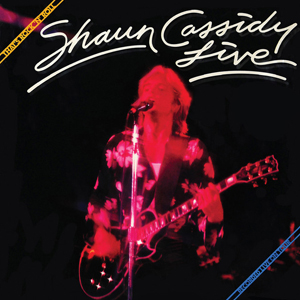 Cassidy: My desire to connect with people. I got up from my desk one day and I felt like Rip Van Winkle, like 30 years had flown by and I’d hardly been out of my house. I thought, “How do I go out and sing without looking like I’m trying to replicate the success I had at 20? Will anyone come? Will anyone care? Will I enjoy it?” These were all questions I was asking myself and a very wise friend of mine said, “Don’t worry about singing. Go out and tell stories. You’re a storyteller. That will feel very authentic to who you are now and people will be interested in those stories.” I said, “I don’t know” and he said “trust me, they will be.”
So I wrote a one-man storytelling show with no music and I did it for some friends. They said, “The stories are great, but people are going to throw things at you if you don’t sing the ‘Da Doo Ron Ron’ or any of your early hits.” And I said, “How will I sing my hits and weave them into my stories?” And they said, “You’ll figure it out.” I ended up doing just that and it worked. I was so happy because I could give an audience, who had bought my records as kids, the nostalgia of hearing those songs again. The songs were fresh for me because I hadn’t been singing them for 40 years, but I could also tell stories and reveal things about myself and my experience with the audience that they don’t know, so it felt authentic to me now. That’s what I’ve done with the Christmas show, same thing…
It wasn’t that I didn’t like doing concerts. I just found that writing and producing TV, which has been my main job for like three-and-a-half decades, just allowed me to have something more like a stable life, and be home and raise kids. It’s been great, so I’ve had this incredible creative outlet that I haven’t really had to manage the life of a public figure until recently again. It’s fun now because I can take all that storytelling that has been my main job and incorporate it with the singing and the music, which was my early job, so this feels like a full circle experience.
Is there anything you want people to know about Shaun Cassidy they might not expect?
Cassidy: I do have one new thing I’m doing, which I’ve never done before. I’m hosting a new radio show on SiriusXM. It debuts November 1 and it’s called “This Side Of Sunset.” It’s a memoir of my growing up in the ’70s. I was 11 in 1970 and 21 in 1980. The music of that decade is what I’ll be playing on ’70s on 7, but between songs, I’ll be talking about my connection to the music and my life in and around Sunset Boulevard. Our family home is a few blocks south of Sunset, and Tower Records, where I used to buy records with my allowance, was on Sunset. The clubs I played in my high school band were on Sunset. The recording studios I ended up making my own records and meeting other artists in my jukebox were on Sunset. So Sunset Boulevard is like the main artery of my coming of age and it felt like a good frame for a radio show. Sirius asked me to do it and I’m looking forward to it.
 Can you give us a parting taste of the types of encounters you’ll be talking about?
Cassidy: One of the funnier ones, and I’ve told this story before, but it still mystifies me every time I tell it. There’s a club on Sunset called the Rainbow and I was in there one night when I was about 15. I bumped into Keith Moon, the drummer for The Who. He and I ended up striking up a conversation and I was with two girlfriends of mine. He said, “Let’s go back to my house,” so we go down to his limousine. The two young women get in the car, he closes the door and the limo takes off. I looked and I said, “Um, where are we going?” And he was like, “Don’t you have a car?” I said, “No, I don’t have a car. I don’t have a driver’s license” and he was like, “ohhh,” so I walked him back to my house, which was a few blocks south of this club.
My parents were out of town. They were working somewhere, so I walked him up to my room. He lays down on the couch and he passes out under my Who poster. I call all my friends. It’s like two in the morning. “Keith Moon’s asleep in my room.” They couldn’t believe it! The next morning he woke up and he looked around. He saw a picture of my mom and said, “Shirley Jones! Shirley Jones is your mother?” I said, “yeah.” He said, “I wanna meet her.” I said, “She’s not here,” but we ended up playing air hockey for like three hours and he ended up inviting me to his recording session. I met Pete Townshend. It was crazy! He was probably 20 years old then me, but was a very sweet guy. I’ve had many, many, many extraordinary encounters with people like that over the years, but that was one of the crazier ones!
Shaun Cassidy performs at the Genesee Theatre on Friday, November 13. For additional details, visit ShaunCassidy.com and GeneseeTheatre.com.
Related Articles
 Bill Medley and The Righteous Brothers bringing back that “Lovin’ Feelin’” for the Genesee
 A soulful, bluesy John Oates & The Good Road Band wind their way to the Genesee Theatre
 Arcada anticipates the gift of renowned artist, actress Darlene Love’s “Love For The Holidays”
 Jerry Martini and The Family Stone want to take Genesee “Higher” as they “Dance To The Music”
 Herman’s Hermits starring Peter Noone getting into “Something Good” and groovy for the Genesee
 It’s a Miracle: Smokey Robinson speaks Motown, “Gasms,” Genesee and groundbreaking moments
 Genesee Theatre will debut Blood, Sweat & Tears featuring former Chicago singer Jason Scheff
 “I Just Wanna Stop” legend Gino Vannelli about to offer Arcada Theatre five distinctive decades