
Kim Thayil talks the “Superunknown” start of Soundgarden and “A Screaming Life”
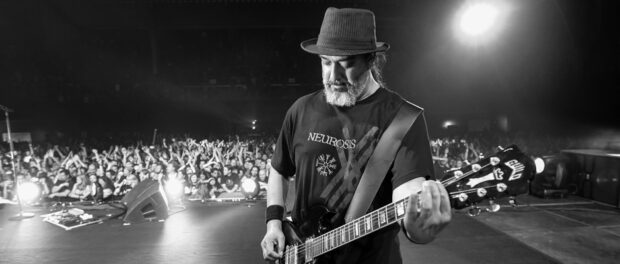 Photos provided by Randy Johnson Photography, HarperCollins and Paul Lorkowski
Alternative rockers Soundgarden remain largely synonymous with the city of Seattle, Washington, forming there in 1984 as they began to usher in a grunge rock movement that would crossover to the mainstream, largely defining popular music in the 1990s.
In their earliest days, Soundgarden existed as a trio, with Chris Cornell still on drums prior to focusing on vocals or picking up guitar. While Cornell and guitarist Kim Thayil were both born in Seattle, Thayil was actually raised in the south suburbs of Chicago, growing up alongside original co-founding Soundgarden bassist Hiro Yamamoto and future Sub Pop Records co-founder Bruce Pavitt in Park Forest, Illinois.
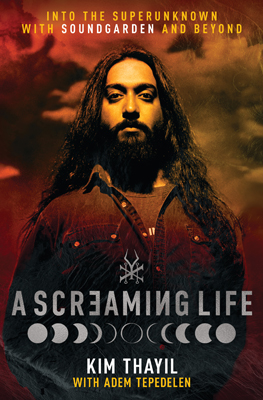
In his new book “A Screaming Life: Into the Superunknown With Soundgarden and Beyond” (now available in a variety of formats via publisher HarperCollins), Thayil drills down on the ideals he took to heart in Park Forest which would help to guide him as Soundgarden began touring across the country and around the world.
The book is littered with references to the city of Chicago and the south suburbs, with Thayil expounding upon an early gig at the long abandoned Tinley Park Mental Health Center, being fired from the food court McDonald’s at Lincoln Mall, the influence of Chicago radio and much more.
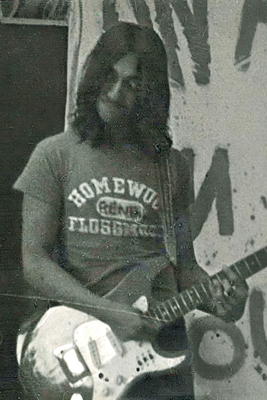
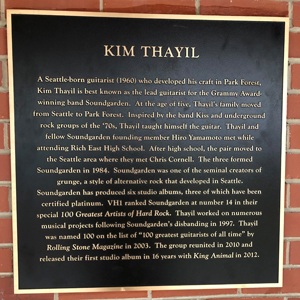
 Photos in the book show Thayil holding his first electric guitar (while sporting a Homewood-Floosmoor t-shirt), posing at President Barack Obama’s inauguration, chatting with Rush singer/bassist Geddy Lee on stage at the Auditorium Theatre and even a plaque honoring his achievements in downtown Park Forest.
Chicago Concert Reviews spoke with Kim Thayil about how his local upbringing informed Soundgarden and continues to guide him, that Tinley Park performance, listening to WLS and WCFL, returning home for Lollapalooza in 2010 and the unique history of Old Style beer.
You write so eloquently about you and Hiro growing up in Park Forest as the son of immigrant parents. How did that kind of experience inform both you and Soundgarden and how does it continue to resonate?
Kim Thayil: I think one of the things that people understood and found is that the town was integrated. Integrated to the extent that there were many Black, some Hispanic and many Asian and Jewish residents of this town that we were all interacting with as little kids playing baseball together or at Cub Scouts or going to school together.
It was not a wealthy town. It didn’t emphasize material wealth or anything opulent. But a lot of the parents were teachers or artists or lawyers or doctors – or students who were working on becoming a doctor or lawyer. So, there was this value toward education and instilling curiosity and intellectual adventurism. And I think these were kind of great assets to be shared and instilled as young kids.
And, of course, Bruce Pavitt, the founder of Sub Pop Records, I met him there when I was 10-years-old. I became very close friends with his brothers and his whole family. I was friends with his sister as well. So, those values were also instilled in them. They had a very large family and they’d regularly make trips together as a family to the Art Institute of Chicago, which was an actual academic institution (whereas the Art Institute of Seattle was a vocational school). And they’d regularly make those trips together. I thought that was pretty cool.
Academia was important. Learning and being curious. Being tolerant. All of these things were understood. And I think we took that with us as adults. So, we kind of had this “Sesame Street” sort of experience.
And then we’d go out into the real world and realize, “Oh. The world isn’t necessarily like that.”
You write quite a bit in the book about Soundgarden’s punk rock roots. To me, when I think about punk, it’s about that ethos and that mindset as much as it is any particular sound. How did punk sort of guide Soundgarden’s early days?
 Thayil: It was certainly do-it-yourself: DIY. Self-production, self-promotion. That was very much a part of our thing. Experimentation. Creative risk taking. And an emphasis on song: precision in presenting the ideas. Lots of ideas but concise packages. Not indulgent explorations of themes or musicianship or an emphasis on proficiency or improvisation. And it’s funny: because those elements eventually did start coming out of the band anyways, as far as jams or soloing. I’m thinking of “Slaves & Bulldozers” of course.
Initially, we tried to de-emphasize those kinds of indulgences like guitar solos and drum solos. We wanted to make these nice little packages and explore novel ideas. We didn’t want to do the same thing twice. We made our own recordings. We were on independent labels sharing cassettes and mixtapes. The whole thing. Our relationship with the fanzines and other bands and the community.
That’s where we came from, the punk rock thing. We weren’t soliciting stardom. We were soliciting and engaging the community and bringing our work in exchange for sharing other people’s work.
I jotted down what seemed like a few local flashpoints in the book. Do you mind if I run through a few?
Thayil: Yeah!
Radio comes up a few times in the book. And you worked at WRHS, the 10-watt school station at then Rich East High School in south suburban Richton Park. Was Chicago radio kind of an early influence at a very different time for the medium?
Thayil: Oh yeah. WLS and Super CFL. (Hums WCFL jingle) Larry Lujack, John Records Landecker.
Yeah, back then you’d have these little primary colored, plastic Panasonic transistor radios that would hang on the handlebars of your bike. You could ride around in your little Stingray or your five speed, pop wheelies and watch your radio dangle there while it blasts out Three Dog Night or Elton John or Ringo Starr.
 I took the Metra Rock Island line recently, which goes through Tinley Park. It passes the long abandoned Tinley Park Mental Health facility and recently I thought to myself, “Wow. It looks like they’re finally tearing it down!” A few weeks later, I’d come to learn, reading your book, that not only did you work there but you performed there (with your then band Identity Crisis). What stands out about that gig?
Thayil: So, working there, I was sort of like a big brother for some of the kids and residents there in the wards. And they’d often ask, “What’s your band like?” So, I talked to my supervisor and said, “Could I bring my band in here and play?” And they thought that was a great idea. They thought that could be a great opportunity for the kids to see some young guys playing their instruments and learning guitar and drums and everything. And so we did! I think a few of the kids did say to me, “You guys better be good! Or we’re gonna kick your ass.” But they loved us.
Also, the band was integrated: an Indian guy, a couple of white guys, a Black guy. And I think everyone dug it. The residents were mixed between white and Black kids and I think seeing a band that was a pop/rock punk band that reflected their developing youthful identities was constructive. And we were happy to do it. It was kind of a cool gig too. It was different.
Getting back together with Soundgarden to first do the Vic Theatre and then Lollapalooza in 2010, what was that homecoming of sorts like for you?
Thayil: That was amazing. It was really brought home once we were there. Because Lollapalooza had changed its format. I hadn’t attended a Lollapalooza show since the late ’90s. So, the idea that it was fixed and it was in Chicago was, when I first heard it, I thought, cool and interesting. But, then, when we got there to Grant Park, it was blustery and warm and humid and you could just feel it in the air. I thought, “This is so Chicago.” It felt so July and August. I believe to my right was the lake and in front of me was the skyline.
And then I had friends from high school who were there and family members. My sister. So, it was quite the homecoming in two ways: it was both Soundgarden performing again and performing in front of the city that I grew up in.
Old Style beer, which I wish was served at Lollapalooza, got a mention in the book. I was shocked and thrilled to see an Old Style beer reference. When’s the last time you had an Old Style?
 Thayil: A few months ago! There are some places in Seattle where you can find it. But, over the years, I’ve had friends bring back 12 packs when they’re on tour. “Hey! When you’re in Chicago, grab a 12 pack of Old Style for me!” That’s happened a few times. I save them and put them in the fridge. And when my friends who I grew up with from Chicago – there are a few of them who live here in the Seattle area – if they come by, it’s like, “Hey! Look what I got for us!”
Now, if you know some of the history of Old Style, back in the late ’70s, Chicago was the one market where Budweiser was not dominant. The one market where Budweiser was not number one was Chicago, Illinois – where Old Style was number one! And that would have persisted if – and I’m going to unfortunately take a little slap at a Chicago icon here – if it wasn’t for a beloved, beloved sports announcer for our fantastic Cubbies coming up from the Anheuser-Busch-owned St. Louis market, coming over to the White Sox, then going over to the Cubs, doing the 7th inning stretch and asking everyone to grab an ice cold Budweiser while singing “Take Me Out to the Ball Game.” If it wasn’t for that, perhaps Old Style would still be ubiquitous! In the neighborhoods around Wrigleyville and in Wrigley Field itself! Jack Brickhouse, Jim West, Lou Boudreau, right on! There! I said it!
And you said it to a Sox fan by the way…
Thayil: My dad actually lived just down the street from old Comiskey. So, I went to a lot of games at Comiskey Park. I was a Cubs fan! But I did grow up in the south suburbs. I wasn’t that picky. I went to both. Whether I wanted to see Ed Herrmann and Bill Melton or Ernie Banks and Ron Santo. It all depended.
But, yeah! Harry Caray went from St. Louis to the White Sox to the Cubs… and then promoted Budweiser!
Kim Thayil’s “A Screaming Life” is out now. To purchase a copy, visit HarperCollins.com. For additional details, visit SoundgardenWorld.com.
Related Articles
 “Freaks On Parade” Rob Zombie, Alice Cooper, Ministry and Filter storm Summerfest grounds
 Riot Fest reunions, entire albums, all shades of alternative and an extra chance to catch The Cure
 Riot Fest gets ready to rumble into Douglass Park starring Slayer, Beck, St. Vincent, NOFX’s farewell
 Get ready for rare reunions, exclusive albums and the whole Riot Fest underground
 Riot Fest turns 20 as Blink-182, Jack White, “Weird Al,” Green Day take over Douglass Park
 The Original Misfits “Walk Among” Riot Fest, Sunny Day Real Estate reunite, Yungblud arrives
 Rüfüs Du Sol gets Lolla’s electronic groove on, plus Twice’s K-pop, Doechii’s hip-hop, Chance’s pop-up
 My Chemical Romance welcomes Riot Fest back to “The Black Parade,” Ramones remembered