
Des Plaines Theatre “Goin’ Out Of My Head” over Little Anthony’s 70th anniversary in show biz
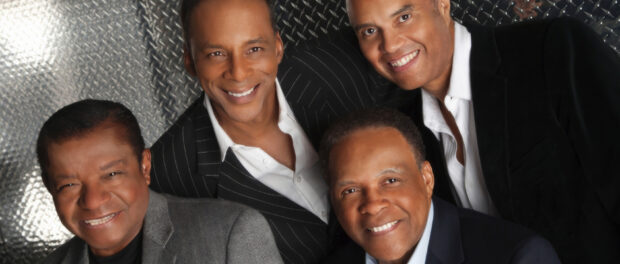
When Little Anthony arrives at the Des Plaines Theatre on Sunday, June 7, it will be the exact month of his 70th anniversary in show business, an absolutely astounding feat shared by an extremely short list of exceptional entertainers.
In fact, the Rock & Roll Hall of Famer featuring the sky high falsetto tenor remains one of the most distinctive voices in all of pop and R&B history, thanks in part to such enduring singles as “Tears On My Pillow,” “Shimmy, Shimmy Ko-Ko-Bop,” “Goin’ Out Of My Head,” “I’m On The Outside (Looking In)” and “Hurts So Bad” while fronting The Imperials (alongside Clarence Collins, Ernest Wright, Nathaniel Rogers, Tracy Lord and Sammy Strain at various points).
Chicago Concert Reviews called the 85-year-old icon for quite a history lesson, ranging from the days of segregation to sampling and practically everything in between, complete with a veritable who’s who of fellow legends the Brooklyn native encountered on the longevity-filled road to immortality.
Do you have any recollections about performing around the Chicago area?
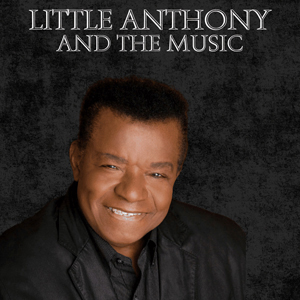 Little Anthony: Yeah, when I first came up there, I did the Regal Theater, back in the day, the ’50s, ’60s. I remember that and I remember other theaters that I did up there. Probably at one point in my life, I was in Chicago at least two to three times a year for like 20 years literally, mostly performing at different places, a lot of places outside of Chicago. In fact, last year around August or so, I was up there quite a bit in the suburbs of Chicago.
How would you describe what’s in store for the Des Plaines Theatre?
Little Anthony: I’m getting all this feedback that this is a beautiful theater and I’m quite excited about that. I like that kind of stuff. That doggone weather went south when that big cold vortex came into Chicago in January. Ya’ll were like ten below zero. I’m going “whoa,” and you know my audience can’t come out in that kind of stuff, ice on the ground, so they had to cancel it and they rescheduled for now. They moved it to the summertime.
I’m doing my concert, I think anywhere from 75 to 90 minutes. You never know, but it will be in that area, whatever the promoter would like. They usually call the shots. In fact, the next call I’ve gotta make is I’ve gotta get the set list to my musicians so they know what’s going on cause everything is very well choreographed. I just thought to myself as I’m talking to you, “Oh, I did not get in touch with these guys and get ’em the set list.” Thank you for reminding me (laughs).
You can’t do everything, but you do what you feel is the most popular of the things that we did…Of course, “Tears On My Pillow,” “Goin’ Out Of My Head,” “Hurts So Bad,” the whole bevy of things that I did and them some surprises, some songs that I like. We mix it all together like goulash and we come out with a pretty darn good show.
What do you consider to be the group’s most iconic songs?
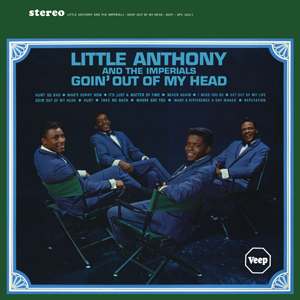
Little Anthony: With the group, the most iconic was “Goin’ Out Of My Head.” There’s no doubt. A lot of people think because it was my very first song as a young man, at 17-years-old, it was “Tears On My Pillow.” It was not. The beginning of really the identity of Little Anthony was not then. It was in the middle ’60s when we started with [producer/songwriter] Teddy Randazzo and the great Don Costa [who ran the Don Costa Productions label]. We started doing “Goin’ Out Of My Head,” “I’m On The Outside (Looking In),” “Take Me Back,” “I Miss You So,” on and on. That was probably the most iconic moment of Little Anthony And The Imperials’ career.
 Could you take us back to the beginning and paint a picture of what it was like when you were getting started?
Little Anthony: You got a couple of days? (Laughs) It was Chicago, and the ’50s and other different cities. Of course, we did face a lot of terrible [prejudice during segregation]. It’s not there anymore. It was the New South, which was very difficult for Black performers to play because they had so many things you could not do, so that’s what we did.
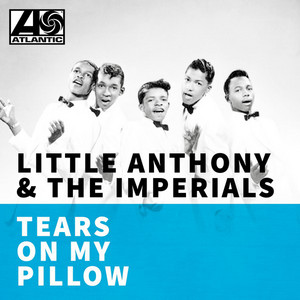
Then “Tears On My Pillow.” When I recorded that, I was in summer school. I screwed up in high school and my mother made me go to summer school so I’d get my diploma. I’ll give you a little anecdote of what happened. We’re doing a final test. We’re finishing and I’m thinking, “Man, I don’t know if I got this thing right or not. Oh man, I don’t want to get a ‘D’.” And I remember these little girls behind me were snickering and they’re pointing at me. They had these things called transistor radios, and they turned it up and guess what song it was? My very first hit, “Tears On My Pillow.” Now how they knew who I was, I do not know to this day. Locally, I was always known as singing around town, but they knew it was me, and when I heard that “Tears On My Pillow” [was being played on the radio], I said, “What am I doing in school? I’m gonna be a star!” (Laughs) Shows you how a young person thinks that’s totally stupid, but at the time, it seemed like a good idea. That was really the beginning of my successful career. Before that, I recorded lots of songs with different groups, but never had a bonafide international hit.
What were the styles that influenced you and some artists you encountered along the way?
Little Anthony: I was raised up in jazz. My father was a jazz musician. He was a big band alto and tenor [saxophone] player, so the music I was involved with was [Frank] Sinatra, all pop sort of music. I’ve often told people, “I’m really a pop singer in an R&B body,” but I came out of that kind of thing. My influences were there, but there were a lot of artists. There was one particular artist who became my very dear friend. He started off in the ’50s, and he was very successful right into the ’60s and then he actually died. That was Frankie Lymon and The Teenagers. I remember that clearly. I remember all the great artists that I associated with. I met Bo Diddley, LaVern Baker, Ruth Brown, Big Joe Turner. I could go on and on, Chuck Berry, Elvis Presley, all these people I became friends with at that time.
 By the 1960s, you were a superstar just like those you mentioned. In spite of the changing musical tides, how were you able to keep the momentum going?
Little Anthony: Really it was a tough time for a lot of artists because you had a thing called the English Invasion that started around 1964. It started with The Beatles, and then they started coming over here and the taste of the generation changes. Every five years, a new generation’s coming up, so they started wanting to hear that. Most artists of that time had the worst time in their lives because they could not compete. Record companies weren’t giving them contacts. They wanted the British groups. That’s where the money was. There were a few of us that still held out and were very successful. One is The Drifters with all the great songs that [Jerry] Leiber and [Mike] Stoller wrote for them. The other was Dionne Warwick with all the songs she did with Burt Bacharach and Hal David, and us with Teddy Randazzo and Don Costa. Maybe a few others, but it was a pretty strange time in between 1964 and 1970. A lot of that momentum could’ve stopped and it didn’t. For some reason, we just held our own.
The group performed on all the major television shows and at the prominent venues of the time. What were a few of your favorites?
Little Anthony: Just about, yeah. I’ll give you two. One was “The Ed Sullivan Show.” That blew us up. The other one was “Kraft Music Hall.” This was the first time I met Liza Minnelli and we’ve been friends ever since. Those two were iconic to me. If you think of what venue you actually remember was so special, Lincoln Center with the New York Philharmonic as our backdrop playing for us, conducted by Teddy Randazzo. Dionne Warwick was on that show and Burt Bacharach was conducing for her. It was black tie with all of the political people. It was a fundraiser and the Avery [Fisher Hall] was packed to the brim. I will always remember that. I looked at this wonderful opera house, thinking of all the great opera singers, and all the great classical people, and jazz and here I am this little nappy-headed kid from Brooklyn actually performing there!
Any thoughts about the 1970s as your initial time with The Imperials was coming to a close?
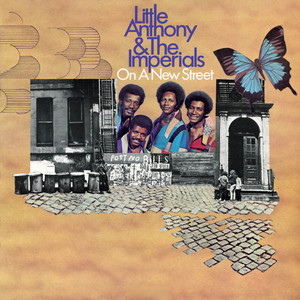 Little Anthony: Oh well, that’s another story because we broke up again [after a short break in the early ’60s when Nathaniel Rodgers was drafted into the Army and Little Anthony returned to acting, which he started during childhood]. It was because Sammy Strain went into business with Redd Foxx and Dionne Warwick, into a restaurant business, so he couldn’t do both. He left…and it wasn’t the same. It didn’t have that thing that made us. We were very successful in the early ’70s, in R&B especially, with Thom Bell and Linda Creed writing for us, the same people who wrote and produced for The Stylistics. We were pretty cool there, but it just wasn’t the same without Sammy and all that. Later on, Sammy did return back into show business, but he returned back with a group called The O’Jays and he was with The O’Jays a long time. Actually, Sammy Strain is one of the few people outside of Paul McCartney [from The Beatles and Wings] who have been inducted inducted into the Rock & Roll Hall of Fame twice. One as Little Anthony And The Imperials and one as The O’Jays.
Why do you think it took so long to get inducted into the Rock & Roll Hall of Fame in 2009? Many would’ve expected you in one of the much earlier classes!
Little Anthony: Well, I was told by Mr. [Terry] Stewart at the time, who was the director of the Hall of Fame, he said, “Did you know you were nominated six or seven times and you didn’t make the cut?” I said, “really?” I heard rumors that we were submitted but we didn’t make the cut and I asked him, “what happened? How did we make the cut this time?” He said, “because it’s your body of work.” It was people like Billy Joel, Paul Simon, all guys that I knew when they weren’t who they were, but they were friends. They were the new giants in the business and they were on the committee. I heard Paul McCartney too. They said, “Why aren’t Little Anthony And The Imperials in there?” It was sort of a groundswell of entertainers that were already inducted, so they took a deeper look, Mr. Stewart said, and when they looked, “My God, this group sold over 60 million records worldwide! How did we miss that?” (Laughs)
Actually, Paul Shaffer, who I knew back in the day when he came out of Canada but was conducting for “The David Letterman Show,” I got a call from him. “Dude, I convinced Letterman that you should be on the show.” They were doing like the ’60s thing with Darlene Love, Dionne and figured, “Why aren’t Little Anthony And The Imperials there?” We didn’t think that way. I didn’t think that way, but they did, so next thing I know we’re on “The Letterman Show” with a 40-piece orchestra, plus Paul Shaffer was playing the piano and organ. In fact, you can Google that and it will come right up. It was a huge success, and what happened was a lot of people at the Hall of Fame, I was told, were watching it. Then that’s why maybe two weeks later, we get a call from Mr. Stewart…I was wondering, “What is the Hall of Fame calling about?” Clarence said, “Well, I think we made it. They wouldn’t be calling us to tell us we didn’t” and he was right. They said, “Welcome to the Hall of Fame. You’ve been inducted!”
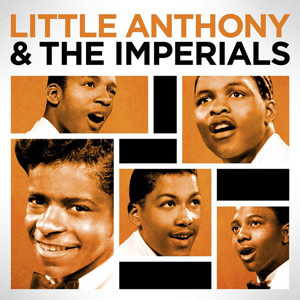 How did it feel when you found out you finally got in?
Little Anthony: I remember getting up and fist-pumping the air. I said “yes” cause I never thought that would ever happen, so that made me feel complete. Not the fact of being in the Rock & Roll Hall of Fame, but you have to be voted in by peers, so that means they voted us in. I do that now. We get ballots every year and we write down who we think should be in there. They have a committee who goes through all that stuff, so that’s how that happened and the rest is history.
What do you think are the reasons for your guys’ longevity continuing to this day?
Little Anthony: You say “you guys,” “you guys” are long gone. Life does that, you know? I’m 85-years-old. You don’t live forever, but by the grace of God, I’m still here. Many of our members are not with us, and many of them got tired of the road and they just don’t want to do it anymore. I like what I do… …Nobody’s guaranteed tomorrow, but I feel pretty good for my age (laughs). I see no reason why I shouldn’t keep doing what I do and I do it well, so there you go! I’m very rare, they tell me, a very rare breed. I’m in good company with Tony Bennett, Betty White and all the rest who made their bones when they were much older, so the longevity comes.
The real key in any [type of] performance for kids coming up is your body of work. What have you done? You could do one hit record. We call them “one hit wonders” and that’s about all you’re gonna go until that wears off. Another generation comes in and you’re history. They’re not gonna know who you are, but in my case, just because I was always there. I’m like an old chair that you take everywhere. Even if you go to a modern house and have modern furniture, you still put that chair there because something about that chair is comfortable like no other chair you got. It may stand out in the house, but it’s there and they call that longevity. This June, I will have been in the business as a performing singer, since I got my first paycheck, for 70 years. That doesn’t happen and I’m grateful to God to be one of these people that was touched, that had the ability for that to happen to because many of my peers are not with us anymore. I can’t [look at] Facebook without somebody else passing on.
So that’s sort of deep, but it’s just I got to the point where like Smokey Robinson is. We’ve become like sort of icons, or legends, or we just did so much that it’s passed on from generation to generation. I’ve had many many, many from Gen Z come and see my show. When I talk to them, [they say], “I really dig your thing man.” “Well, how do you know?” “Oh, we saw you on YouTube.” They were just surfing different performers of that era and they realized, “They must have been very good at that era.”
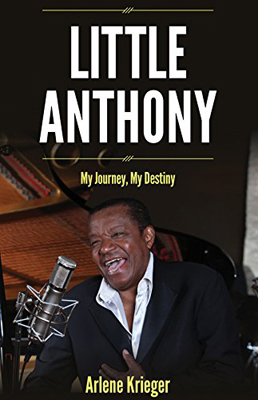 I do a lot of podcasts with a lot of young people and they all ask the same thing. “Hey man, what was it like then?” And I will tell ’em, “Well, it was like this. We didn’t have phones. We didn’t have this. We didn’t have that.” “How did you get in touch with each other?” “Well, it wasn’t by drums dude. (Laughs) We did have phones with cords on them. We were able to talk to each other!” So it’s fun because the curiosity of Gen Z is so wonderful. First I thought this generation is done for. No they’re not! They’re finding their way. Somehow they’re getting it and I love them now. I really enjoy that, so I do find when I do shows, some of them show up.
How did you react to being sampled by Daft Punk and so many others from multiple genres?
Little Anthony: Oh my stuff has been sampled so much I couldn’t tell you all the people! In fact, to be honest with you, a young lawyer here filed something but that’s another story. There’s a lot of money that’s owed to me. He’s doing the deals to get that money, but I guess I was sampled by many, many, many, many people, especially rappers. I don’t know. I don’t listen that much. That’s not my era. I’m not caught up in it. I do like hip-hop, in many ways, when it first really was going and now we’re not really sure where everything is going. But then, I saw the talent in a lot of people, [R&B/pop stars] Alicia Keys and Lady Gaga, all these kinds of people. Some of them I met, so I see their talent and I applaud them. For their era, they do great stuff.
What’s allowed you to be able to preserve such a pure falsetto singing voice?
Little Anthony: I’ll answer you very simply. I am a man of faith. It’s not natural. It can’t be at 85-years-old. I still have to hit the high C, B-flat, F all the time and it’s there. It’s older and it’s much more mature, but it’s there. It’s a gift from God. It’s something He gave me. Now you have to ask Him why that happened, but I understand it very clear. There’s no way that most of the people I know can maintain what I’ve had to this day. It would come supernaturally.
In fact, I had some trouble with my chops one day and they told me something scary. They said, “Oh, your mid-range of your vocal chords are asleep.” I said, “What does that mean?” “Well, it just means it’s sleeping. We’re gonna give you exercises to wake it up. At least it’s not paralyzed, cause if your chops are paralyzed, you’ll be whispering.” So I got some exercises and it’s been very helpful. I’ve got all kinds of little exercises, so I do certain vocals every other day, 30 minutes a day, to keep waking it up so to speak. That’s why I sing the way I sing, plus experience too. I’m a better singer now, I believe, not because of high notes. I don’t go to high notes unless I have to. I visit the high notes there. I don’t live there any more.
Is there anything you would’ve changed throughout this entire journey?
Little Anthony: No. I would’ve changed the way I came up. I would’ve been better because I became a man of faith later in my life when the Lord touched my life and changed it, but at that time, I was like everybody else. “Now it’s party time,” you know? By the grace of God, I probably could’ve been wiped out like a lot of my entertainment friends were, but I’m not, so that’s about the best answer I can give.
Little Anthony performs at the Des Plaines Theatre on Sunday, June 7. For additional details, visit LittleAnthonyAndTheImperials.org and DesPlainesTheatre.com.
Related Articles
 Des Plaines Theatre “Dancing In The Streets” over the “Heat Wave” of Motown’s Martha Reeves
 It’s a Miracle: Smokey Robinson speaks Motown, “Gasms,” Genesee and groundbreaking moments
 Arcada anticipates the gift of renowned artist, actress Darlene Love’s “Love For The Holidays”
 Tito Jackson talks The Jacksons’ Hard Rock homecoming, famous family and the blues
 Commodores keep working the “Nightshift,” promise Genesee “Brick House” and ballads
 Jerry Martini and The Family Stone want to take Genesee “Higher” as they “Dance To The Music”
 Bill Medley and The Righteous Brothers bringing back that “Lovin’ Feelin’” for the Genesee
 “The Last Waltz” in Des Plaines, Arcada won’t be end of balladeer, rocker Engelbert Humperdinck