
From Netflix to Skokie’s North Shore Center with writer, speaker and satirist Fran Lebowitz
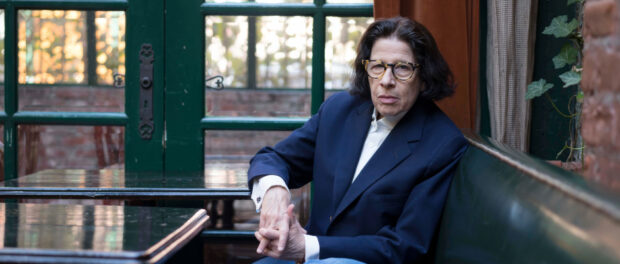
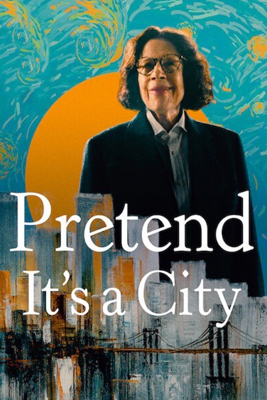
For nearly 50 years, writer, speaker and satirist Fran Lebowitz has applied her sardonic wit to a variety of subjects. Reaching the “New York Times” bestseller list with “Metropolitan Life” and “Social Studies” in the late ‘70s and early ‘80s, Lebowitz has more recently delivered her hilariously scathing critiques both on stage and on screen, appearing in seven episodes of the Martin Scorsese-directed conversational Netflix documentary series “Pretend It’s a City” in 2021.
Set to appear at Skokie’s North Shore Center for the Performing Arts on Wednesday, November 18 for a sold out moderated live interview, Chicago Concert Reviews spoke with Fran Lebowitz about what makes Chicago a real city, her reaction to the election of Donald Trump and an infamous first amendment battle set in Skokie in 1978. A transcript of our conversation, lightly edited for length and clarity, follows below.
I’ve heard you say many times that there are only two real cities in the United States: New York and Chicago. You’ve said a lot about New York – but what makes Chicago the other?
Fran Lebowitz: Because it’s an actual city. In other words, there’s many, many places, as you know, in the United States, that call themselves cities. A few months ago, I was in a place called Iowa City.
I’m sorry. (Laughing)
Lebowitz: Have you ever been there?
I’ve been to Des Moines and the Quad Cities – but not Iowa City, no.
Lebowitz: OK. Iowa City is where the college is, that giant University of Iowa. And someone asked me there what do I think of Iowa City? And I said, “Well, Greenwich Village isn’t really a village either.” But Chicago is a real city.
 Also, it’s really beautiful – which is not true of New York. I’ve never heard anyone say New York is beautiful. Because it is not. But Chicago has fantastic architecture. You live there, I’m sure you know that.
I guess I’ve always really liked Chicago. Lots of places I go to, I think, “Oh, I don’t want to go there…” But I never feel that way about Chicago.
Well, we appreciate that. I am curious though – generally speaking, what do you learn, especially these days, about people and places in your travels?
Lebowitz: Well, mostly I speak to – aside from hotel employees – people who’ve come to see me. So, that’s not exactly a cross section of the country. But I can tell you this… I don’t just do this in the United States. I do this in Europe, Scandinavia, Australia, New Zealand and, no matter where I go, I’m not exactly sure, but I would say that 85% of the questions are about Trump.
We’ll get to those!
Lebowitz: Truthfully, I’ve been doing this thing, where I go around speaking, since I was 27. I’m 76. And always during Presidential election years, there were lots of questions about the election. But, since the advent of Trump and politics – no matter where I go, it doesn’t matter whether I’m in Chicago or Zurich – the questions are about Trump. “When will he stop doing…” I don’t know!
In 2015, I went on a trip to Ireland. Virtually no language barrier, right? But, at that point, late summer, the Trump/election thing was just starting to look like it wasn’t a joke. So, that’s all anyone wanted to ask an American tourist about: “Is this real? How is this actually happening?”As a New Yorker, you had a little bit more of a glimpse behind that curtain than the rest of the world that was mostly just watching him on TV. What was your initial reaction to that candidacy once it seemed like it was actually gonna be a thing?
Lebowitz: Well, the first time he announced it in, I guess it was 2015, I paid no attention to it. Zero. It never occurred to me that it was in any way a thing you had to pay attention to! I don’t know how old you are, but I’m certain you’re younger than me because everybody is younger than me – except Trump.
In the ‘60s I think, or maybe the early ‘70s, there was a comedian whose entire act was that he ran for President every four years. I can’t remember his name. It was Pat something [Pat Paulsen]. And he never got on the ballot. And nobody really paid attention except that, “Oh. Yeah. It’s an election year and this guy always talks about running for President.” Well, that’s exactly what I thought of when Trump announced he was running for President. I thought, “Oh I remember that comedian…” I’m telling you, I paid no attention to it at all.
Luckily, I’m not someone who bets money. Because I would’ve bet every penny I had. It was a ludicrous idea to me. To me, it would be just like someone saying, “Hey, Fran, guess who’s going to be the next Pope? You!” It was that ludicrous.
 So, I didn’t pay attention to it much until a friend of mine, who is not a lunatic or a moron, said to me, “You know, he can win…” I said, “What are you talking about?” That person said, “You don’t understand this country because you don’t watch reality television.” Which is true: I’ve never seen one minute of reality television. I had heard of that show he had [“The Apprentice”] but I had never seen it. And I thought, “Well… So what?” There’s a lot of things I don’t pay attention to!
Then my agent called me and told me that another client of his was actually somewhere outside Chicago. And he said, “She’s in a car and once she gets out of Chicago, all she’s seeing are Trump signs.”
Uh huh.
Lebowitz: I said, “Well, how many people could that be?” The night he won the first time, I was shocked. I was completely flabbergasted. I really couldn’t believe it.
Because earlier that day, when I went to vote – and at the time of the election, I lived in SoHo – I went to vote with a friend of mine. Then we went to have lunch. We were in fantastic moods! Everyone in that neighborhood was gleeful! Not because we were afraid he was going to win but because we thought, “This is over! We don’t have to hear about him anymore.” And I ran into a guy who, at that time, I believe was an editor of “Time” magazine. And he showed me his phone. He showed me the polls and how great they were!
I walked over to a friend’s house early that evening to go to a victory dinner. His house was in the Village. And as I walked through SoHo and the Village, I’d never seen the streets of New York happier. Really. Except for the night Obama won for the first time. But it was like Mardi Gras! And mostly because people thought this was over and we didn’t have to hear about him anymore.
Well, I would say that that night, when he did win, was one of the three most shocking days of my life by the end. I remember every second of the day or night afterward. The first one was, of course, the assassination of Kennedy. The second one was 9/11. The third was the first night he won.
When I walked over to this guy’s house, the streets were packed with people. But when I left that night, it was dead. There was no one in the street. You couldn’t hear a single thing. It was shocking.
The second time he won, I was less shocked. I was also in London. So, I was less shocked – but it was equally horrible.
 This time around you will not be in the city proper, you will be in the northern suburbs. What’s your take on the suburbs, whether it’s here in Chicago or across the country?
Lebowitz: Well, first of all, I will be in Chicago. (Laughing) I mean, I will go to Skokie but I will be staying in Chicago. And, by the way, when I went to Iowa, I stayed in Chicago too. When I went to Iowa, which I’d never been to before, I said, “How far? Can someone drive me there and back?” They said “yes.” Because I’m not staying in Iowa. I’ll stay in Chicago.
So, again, it depends how old you are. But the reason I even know the name Skokie – and I don’t even remember when this was but I think it was the ‘70s – there was a Nazi march in Skokie. Or the Ku Klux Klan. I don’t remember which.
Right. Illinois Nazis [as famously depicted in the film “The Blues Brothers”].
Lebowitz: OK. Well, the ACLU defended them. I don’t know if this is still true, but at the time I think many Holocaust survivors lived there.
It is still a heavily Jewish community.
Lebowitz: There can’t be many left. But that’s why they chose that place. And I remember the ACLU defended the Klan or the Nazis or whatever they were. And I remember lots of arguing about it. I thought the ACLU was right by the way. But that’s the only reason I’ve heard of Skokie.
But, on the suburbs in general? When people ask me, like, AOC for instance, who I like a lot, do I think she could win a Senate seat? I say no. She could not. Because here is what New York state is: It’s New York City, part of Long Island but not all, Westchester, which is a near suburb, and the lower Hudson Valley. And then Alabama. This is what Pennsylvania is: it’s Philadelphia, the Philly suburbs, Pittsburgh, the Pittsburgh suburbs… and Alabama. This is every state in the country! Around cities, the city itself, and the near suburbs, you have sane people. And then, in the very rural areas, you have these other people. And if it wasn’t for the Electoral College, these people would never win. And that is why, of all the terrible things, that’s the worst thing.
When I was in London last election day, I was going crazy. Because I was watching the BBC and they kept trying to explain the Electoral College in some logical way. I’m always trying to explain it to people that are not Americans. Because no one ever understands. “How is it possible that Hillary Clinton gets three million more votes and he wins?” And I always say, “Because of the Electoral College.” Then I’ll explain what it is. And they go, “Oh. So, it doesn’t work?” And I always go, “No! It works perfectly! It works exactly as it was meant to work.” Which is to say it vastly and massively overweighs the rural vote.
So, I always say to people, “You know what the popular vote is called in other countries? ‘The vote!’”
Fran Lebowitz appears the North Shore Center For Performing Arts’ George Van Dusen Theatre on Wednesday, November 18. For additional details, visit FranLebowitz.com, NorthShoreCenter.org and Ticketmaster.com.
Related Articles
 Jaafar, Jackie and Marlon Jackson head home to Gary for a red carpet rundown of “MICHAEL”
 The Dead Daisies’ Glenn Hughes, Doug Aldrich prep exclusive Arcada dive into Deep Purple
 Hard Rock having comic side of “Talent” judge, “Deal” host Howie Mandel alongside Arsenio Hall
 Veteran stand-up Paula Poundstone pours City Winery a double cocktail of New Year’s Eve comedy
 Aerosmith bassist Tom Hamilton talks about becoming Close Enemies, nearing City Winery
 BoDeans bring North Shore Center four decades of “Love & Hope & Sex & Dreams & Good Things”
 “One Week” away, ex-Barenaked Ladies co-leader Steven Page bares all for North Shore Center
 “Rocky Horror Picture Show 50th” reunites cast, prompts wild Chicago Theatre screening