
The Dead Daisies’ Glenn Hughes, Doug Aldrich prep exclusive Arcada dive into Deep Purple
 Photos provided by Chipster PR
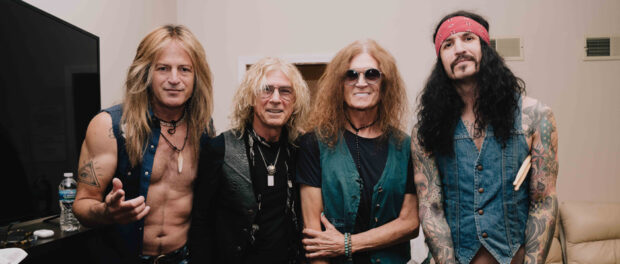
Supergroups are rarely more renowned than The Dead Daisies, who feature a mix of regular and rotating players, including an immensely celebrated current line-up consisting of singer/bassist Glenn Hughes (Deep Purple, Trapeze, Black Sabbath), founding rhythm guitarist David Lowy (Doc Neeson’s Angels, Red Phoenix, Mink), lead guitarist Doug Aldrich (Whitesnake, Dio, Lion) and drummer Tommy Clufetos (Sabbath, Rob Zombie, Alice Cooper).
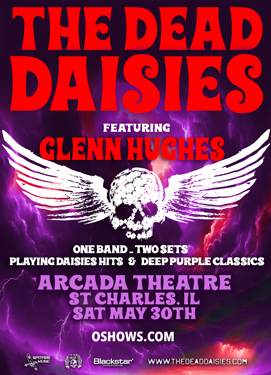
However, there’s only going to be one opportunity to see them all this entire year, and it just so happens to be smack dab in the center of America at the Arcada Theatre in St. Charles on Saturday, May 30. The show marks yet another area exclusive, courtesy of impresario Ron Onesti, and it’s bound to attract a global audience.
In the meantime, Chicago Concert Reviews chatted with both Hughes and Aldrich for the details behind the one-off of a lifetime, the glue that holds The Dead Daisies together and what it was like to be members of their many other iconic bands.
Do either of you recall any standout performances around the Chicago area?
 Glenn Hughes: Going back all those years ago when I was with Deep Purple at the [International] Amphitheatre. We did two or three nights in a row back in the ’70s and it was absolutely gobsmackingly beautiful, a really great audience.
Doug Aldrich: It’s an iconic city in the U.S., so it’s amazing to get the opportunity to visit there, and of course, the gigs have always been great there. We’ve played a lot of different venues in Chicago and it’s always a great night, but this is a little outside [of the city], the Arcada. It’s an amazing venue, and Ron, he’s one of the greats in the U.S. as far as a venue owner. They always have great food there. They’ve got a really great merch store and the stage is killer, so we can’t wait to play.
How did this show come to be and what’s on tap?
Hughes: Looking forward to it…I had lunch with David Lowy in L.A. a few months ago and he really enjoys playing the Deep Purple songs that I came in with. He was wondering, “Is there any chance that we could maybe do a show of two sets, like some Daisies songs and some Purple songs?” I’m going, “well sure, why not?” And it led to some further talking about where should we rehearse, what time should we rehearse. He basically steamrolled that point and we find ourselves going to New York in a couple of weeks to do some rehearsals.
Can you explain a bit about the rotating membership of this supergroup?
Aldrich: It’s really similar to like how Deep Purple was in the ’70s. There was a lot of musicians that came in. There’s a couple of iconic line-ups. Glenn’s was one of the favorites. But the Daisies, they’ve had several lead singers, several guitar players. Definitely we’ve had several drummers and I’ve been in it coming up on ten years now. It’s been a blast and everybody’s like family, so people come and go. [Former Whitesnake/Foreigner drummer] Brian Tichy came in before me, and then he left for awhile, and then he came back, so it’s kind of up to people’s schedule, what they’re doing. I think it’s just something really unique to do this one-off and to be back with Glenn. It’s gonna be great because his Purple set is killer, so it’s like we got big shoes to fill doing that. It’s gonna be awesome.
What attracted you guys to join the Dasies in the first place?
 Hughes: Well for me, I had no idea it was happening, but I knew Doug was in the band. Doug came on the road for me in 2015 for six months and it was fantastic. I’ve known Doug since he was with Ronnie Dio of course, and my best friend is [former Deep Purple co-singer turned Whitesnake leader] David Coverdale, so I’ve known Doug throughout many different experiences for him. So when I realized Doug was playing in this band called The Dead Daisies, I said, “ha, well my friend is in that band. Let’s check it out.” I met with David Lowy and we discussed me writing some songs for them. It went well and I joined the band in late 2019.
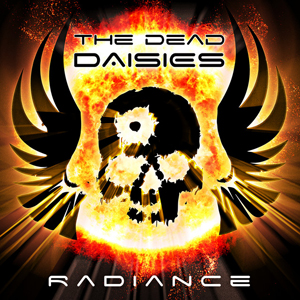
You guys made two great records together so far, “Holy Ground” and “Radiance.” Why do you think those resonated so much?
Aldrich: Good songs. Glenn’s been doing this for longer than I have. He’s done a lot of records and he knows his way in the studio. We had a different team when we worked with Glenn. It was Ben Grosse [Marilyn Manson, Filter] behind the controls, so it definitely it was a bit different, but in a great way, absolutely unique. I just think it comes down to the songs. I know Glenn always wants to play the best songs. He writes the best songs, stuff like that.
How would you describe the chemistry this line-up of musicians has together?
Hughes: I joined the band right before COVID. Basically we made the album called “Holy Ground” in France. We got back, and two months later, we were hit with COVID, so we couldn’t really do anything at all. We were just basically waiting for this turmoil to go away, but we did “Holy Ground” and we really enjoyed that album. Then we made the next one, [“Radiance”], so we could actually tour playing two new albums with new material. It was fantastic and I love the camaraderie in the band. Number one, it’s about who I’m working with as a human being. Are they funny? Are they nice? Can I have coffee with them in the morning? That ticks all the boxes for me, and then if we can make great music, it’s a win, win, win.
Your histories speak for themselves, but if you flashback to the front half of your careers, when did it feel like you first made it and were truly established?
 Aldrich: Mine started out a slow burn. I’d been creeping around and doing stuff for years, but I think when I joined Dio. He had asked me to join him ten years earlier in 1991 about and I wasn’t ready to give up on my guys, [Bad Moon Rising], at that time, but then in 2001 or 2002, he asked me again. He really put me out there and it was a great thing. I wouldn’t say I felt like I made it, but I felt like I was really a part of a family on the road. I loved the music we were doing and it felt really good. It’s kind of a weird thing to say, “well, I made it” (laughs), but it felt good to tour and Ronnie took me out there.
Hughes: For me, it would’ve been all those years ago before Deep Purple. I had a trio called Trapeze, who were quite popular in Chicago actually, a trio that was [guitarist] Mel Galley, who later went on to join Whitesnake, and Dave Holland, who played drums with Trapeze and of course went on to join Judas Priest. They are no longer with us, but for me that was the subliminal moment when I realized I was working my tail off in America. We were basically English guys living in L.A. and Texas, and we worked America completely. We worked in every bar building all the way up to theaters and then to arenas. That was the groundbreaking thing for me, starting from scratch and having success with my school friends.
Doug, after Dio you went on to join Whitesnake, another legendary band. Where there any particular flavors or styles you were hoping to bring to its sound?
Aldrich: I really love the early Whitesnake, the bluesy Whitesnake they did with [original guitarist] Bernie Marsden, who’s no longer with us, and [fellow co-founding guitarist] Micky Moody. I really loved the slide, but also, Whitesnake was interesting because the biggest stuff was with [later guitarist] John Sykes. I love John as well, God bless him. I was just trying to hybrid those two sounds together. That’s really what I was hoping to do and we did.
Glenn, what do you think Deep Purple’s Mark III and IV line-ups were able to accomplish that were specific to those periods of the band’s history?
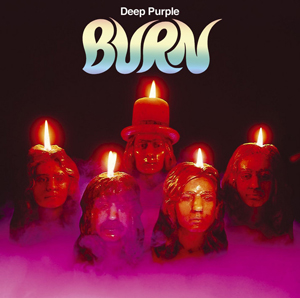 Hughes: I think the biggest factor for me was that David and I are both singers. I was coming in as the bass-playing singer and David was the singer. In that time in the UK, there was no band with two lead singers, so Deep Purple, [guitarist] Richie [Blackmore], [keyboardist] Jon [Lord] and [drummer] Ian [Paice], thought it would be a different opportunity to have two lead singers coming in. [I have a] lot of respect for David, a very close friend of mine. The key factor for me was we were establishing a new sound and new vibration, when David and I were sharing the lead vocals, and it was spectacular. We had a great combination.
One other aspect of those periods was the fact that you worked with two iconic guitarists, Ritchie Blackmore and Tommy Bolin. What was it like playing with each of them?
Hughes: Richie, he’s a character. It’s a persona, a real, full-on character. As a guitarist, in my opinion, in the early ’70s, it was Ritchie Blackmore, [Led Zeppelin’s] Jimmy Page and [Cream’s] Eric Clapton, and of course, [Black Sabbath’s] Tony Iommi. He was an amazing guitar player, but he was a strange guy and it worked. His craziness was calculated. Tommy, on the other hand, was the sweetest guy from Sioux City, Iowa with a childlike quality, an amazing guitar player. Two very very different personalities and two very different kinds of guitar playing.
What are a few of your other projects that personally stand out?
Aldrich: When Glenn joined the band in 2018, I pretty much stopped doing everything else and just went all in on The Dead Daisies. It was a good thing because trying to do too many things at the same time, for me, it gets confusing and I start to kind of get cross contaminated a little bit. But I’ve had some great sessions over the years and different things. I did a session with Lady Gaga once. That was pretty cool.
Glenn: Absolutely fantastic! For me, I had done so much work with Tony Iommi. He is one of my closest friends. I’ve done three albums with Tony and I’m still in a band called Black Country Communion with [guitarist] Joe Bonamassa, [drummer] Jason Bonham [Led Zeppelin, Foreigner] and [keyboardist] Derek Sherinian [Dream Theater, Alice Cooper]. I’m also in a band called Kings Of Chaos, which is featuring [drummer] Matt Sorum [Guns N’ Roses, Velvet Revolver], [guitarist] Nuno Bettencourt [Extreme, Satellite Party] and [guitarist] Gilby Clarke [GN’R, Rock Star Supernova], amazing people I’m working with. I’ve been in that band for about 16 years. [Bassist] Duff McKagan, [guitarist] Slash, [both of GN’R], we all come together and play great songs.
Doug, how did you and Lion wind up working on the theme song to “The Transformers” movie and what does having that place in pop culture history mean to you?
 Aldrich: It was part of the deal that we signed. Lion got passed on by every major label. Basically, we just didn’t have a sound like the L.A. sound. Our singer was British, Kal Swan, and he really loved the bands from England. He loved Whitesnake, Purple, Status Quo, [Ireland’s] Thin Lizzy and a bunch of other things, so our sound definitely was [inspired by them]. We got passed on, but a label signed us, [Scotti Brothers Records]. It wasn’t a great deal, but part of the deal was they did have some stake in some movies, so the first thing they said was, “We’re gonna get you guys in the studio right away to record a song for ‘Transformers’.” So we kind of took the theme song, and co-wrote it and then recorded that. It wasn’t exactly what we were wanting to do. We were wanting to do our stuff, but we did get co-writes on it, and it got in the movie and a lot of people know the band because of that show. It was a cartoon and then it got to be a movie. They did a few movies with it, so it was cool.
Glenn, how do you look back on your time fronting a version of Black Sabbath?
Hughes: Tony and I grew up together in the UK. All the guys in Sabbath are close friends of mine. I’ve known all of those guys since 1970, and in the mid-80s, [post-Ozzy Osbourne singer] Ronnie [James Dio] had left the band and they were having a problem finding someone to come in. Then Tony said, “I’m going to do a solo album in L.A. Would you mind coming down to sing a song?” It was supposed to be a Tony Iommi solo album, so I went down to sing it, and the next day I sang another song and then another song. I did a whole album with him, and on the very last day of recording, Sharon [Osbourne’s] father [and band manager] Don Arden came down. He’s smoking a cigar. “I’m gonna tell you what’s going on gentleman. There’s been a change. We’re gonna call it Black Sabbath.” But the actual album, it doesn’t sound anything like Black Sabbath! But it was a great album. I love the album and Tony loves it. I love Tony very much.
Doug, you recently contributed to the Cactus All Stars’ “Temple Of The Blues” album and performed a similar one-off concert at the Arcada. How was that entire experience?
Aldrich: Yeah, that was pretty cool. [Drummer] Carmine [Appice] had asked me to play on the record and do a cover of one of the old Cactus songs, [“Let Me Swim”], and that was a blast to do with him. Then a couple years went by and they did another Cactus record. I wasn’t available to do that second one, but he called me and it was so funny. It was like, “Hey, I’m doing this show with [guitarist] Pat Travers, and [guitarist] Eric Gales, and [King’s X co-singer/bassist] Dug Pinnick and some people. I was like “yes!” He didn’t even ask me (laughs). I just said, “yes.” He just said, “cool,” and then a couple of weeks later, he said, “Hey, you’re in.” It was a really great experience with a bunch of really cool people. I made some new friends and reconnected with some people that I haven’t seen for years, like Pat Travers. I was a huge fan of his, and then we reconnected and now we’re texting every day. But just really a lot of fun and it was really good.
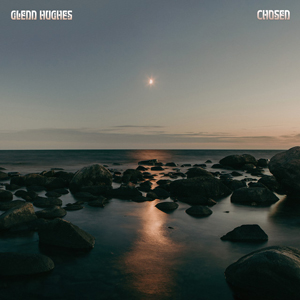 Glenn, give as a glimpse of your latest solo release, “Chosen”?
Hughes: I recorded the album in 2024 and I wasn’t going to tour until 2025. I took a break, so I decided to release it last September. We went through Europe, we went through South America and then I was supposed to start in America a couple of months ago. But I was having balance issues, really severe vertigo problems, so I had no choice but to postpone this particular tour. In this time since the tour was canceled, I’ve been in physical therapy, working with a team of people that are really helping me stay on my feet, so I can actually maneuver well…I am very, very grateful that I have this voice and I’m really grateful to be playing with my friends again.
How do you take care of yourselves to keep performing at such an optimal level?
Hughes: Well, for me, I have this “no fear” thing. As humans, we are driven by a hundred forms of fear, all of us, animalistic. If I step into fear, I actually have a name for it. I’ll call it “Bill,” or “Derek,” or “William.” If I can control it and say, “I know you’re here. You’re my friend. We’re gonna get through this. Let’s have a good time.” So when fear creeps in, I recognize it, I face it, and breath and let it go. And a lot of water and a lot of sleep.
Doug, what keeps those fingers going so fast?
Aldrich: They’ve slowed down a little bit (laughs). After all these years, I realized that of course there’s times when you need a little fire, but also, I love the opportunity to try and get as melodic as I can within songs now, which is just a change in me. As far as trying to stay healthy, I personally think it’s really good for me to exercise, because it not only helps your body and everything, but it helps your mind too. It helps manage stress or things like that.
As you both prepare for this special show, where have you heard folks will be coming from?
Hughes: I’ve got people flying in from everywhere. Europe for sure. They’re coming in from Europe, all over. I know a lot of people that are coming to the show because it’s the only show you’re gonna see with this particular group of songs, so they want to catch it when they can.
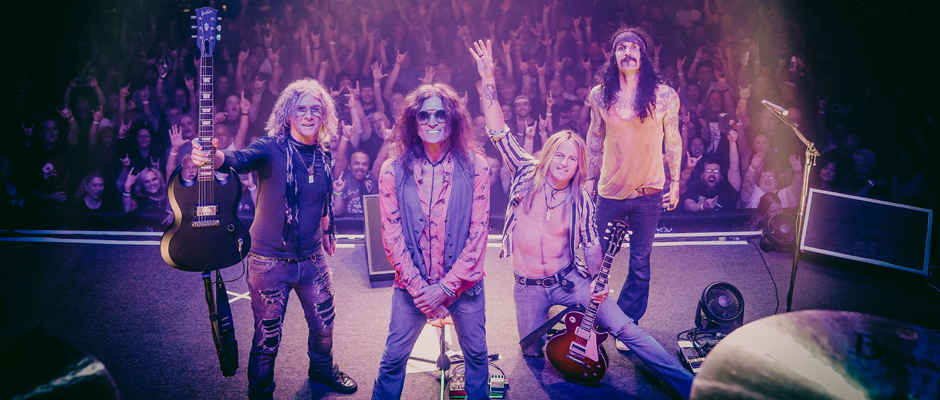 The format of the two sets is being advertised, but without giving too much away, can you at least let out a little sample of what you’ll be playing?
Hughes: We’re going to be doing a good selection that I was on with Douglas, “Holy Ground” and “Radiance,” and of course there’s gonna be some other Daises songs, which the lovely John Corabi [Mötley Crüe] sang and I say that with respect. I love him very much. So we’re gonna be giving the audience a good dose of what The Dead Daisies are…Basically [the Deep Purple set is] gonna be the songs from Mark III and IV, and maybe a couple of other songs which are very popular, but I can’t really say what they are because we want to keep it kind of a secret.
What about anything by Whitesnake or the other acts you’re all connected to?
Aldrich: No, this is strictly a Purple/Daisies production, The Dead Daisies featuring Glenn Hughes. We have enough songs and there’s a bunch of people out playing Whitesnake anyway. This is a unique show that you’re not gonna get anywhere else. I’ve had tons of friends [say they are coming]. I’m really surprised that people are like, “I’m gonna drive from Florida,” so it’s gonna be a great night. I think it’s pretty close to selling out, but there’s still tickets available. Get ’em while they’re hot!
The Dead Daisies featuring Glenn Hughes perform at the Arcada Theatre on Saturday, May 30. For additional details, visit TheDeadDaisies.com, GlennHughes.com and ArcadaLive.com.
Related Articles
 Arcada becomes Cactus’ “Temple Of The Blues II” featuring GN’R, Mr. Big, Whitesnake alumni
 Foreigner, Whitesnake slide assertively into the jukebox on Northerly Island
 Voices Of Rock Radio’s John Elefante about to “Play The Game Tonight,” take Arcada to Kansas
 Veteran Styx beat keeper Todd Sucherman moves to the mic for “Last Flight Home”
 Deep Purple delivers “1 More Time” for CU1 Amp alongside Yes’ quicker take on “Classic Tales”
 Aerosmith bassist Tom Hamilton talks about becoming Close Enemies, nearing City Winery
 “Walk On” with former Boston and Orion The Hunter singer Fran Cosmo, Voices at Arcada
 Get ready for rare reunions, exclusive albums and the whole Riot Fest underground