
Stick man Tony Levin on BEAT’s revival of 1980s King Crimson coming to Riverside, Copernicus
 Photos provided by Jon R. Luini / Chime
Each season of King Crimson was characterized by radical innovation and unpredictable experimentation attracting quite a cult following, which when it came to the 1980s, made them quite an asset amidst the new wave and MTV ecosystems.
Classic albums “Discipline,” “Beat” and “Three Of A Perfect Pair” included everything from art rock to funky influences, post punk, industrial, and of course, plenty of prog, alongside a revitalized lineup featuring lead singer/guitarist Adrian Belew (Frank Zappa, David Bowie, Talking Heads) and bassist/Chapman Stick/synthesizer player Tony Levin (Peter Gabriel, Liquid Tension Experiment, Stick Men) joining multi-instrumentalist founder Robert Fripp and longtime drummer Bill Bruford (Yes, Genesis).
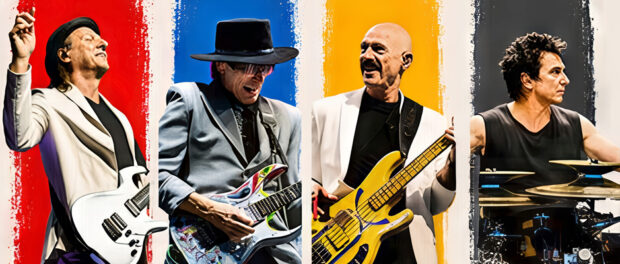
Though that line-up and the group in general is no more, Belew and Levin are back to recreating this entire era in the aptly named BEAT, alongside longtime admirers/fellow virtuoso musicians Steve Vai (Zappa, David Lee Roth, Whitesnake) on guitar and Terry Bozzio (Zappa, U.K., Missing Persons) keeping the beat.
Chicago Concert Reviews called Levin prior to Riverside Theater on Monday, October 19 and the Copernicus Center on Wednesday, October 21 for reflections on the iconic source material, putting this unique tribute of sorts together, juggling Peter Gabriel projects and why this particular band probably won’t ever happen again.
How were the seeds of BEAT sewn? 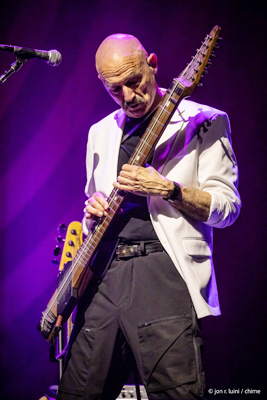
Tony Levin: Adrian Belew, one of the guitarists and the singer in King Crimson in the ’80s, got the idea years ago that he would like to revisit that music because King Crimson stopped playing a lot of it and it’s really good music, really meaningful. He thought, “Let’s not do it with King Crimson members. Let’s put together a band of really great players.” However, lucky for me, he decided to use me on bass, even though I was one of the Crimson members at that time. He cast about for the right guy to play the other guitar part and he found Steve Vai. He knew Steve Vai’s a great player [who] can tackle the challenge of playing Robert Fripp’s parts from the ’80s, which are very difficult, but also play with his own style, cause we don’t want to be a cover band playing King Crimson the way it was. We want to be ourselves, so he did that. And then the drummer, he found Danny Carey of Tool was fantastic in the same way of reproducing Bill Bruford’s energy, but changing the parts up. This tour we have the wonderful Terry Bozzio on drums. Danny was busy with Tool plans, so he couldn’t do this tour and Terry Bozzio is not only an old friend of ours, but each of the three of us have played with him in different circumstances over the years.
What is Robert Fripp’s reaction to your revival of this period?
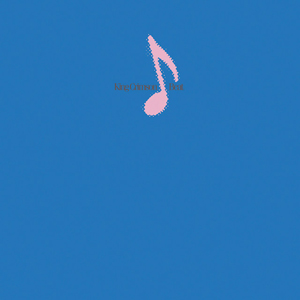
Levin: He’s come to a number of concerts. He says he loves the band and he’s excited about it. He’s the one who suggested we call it BEAT. We didn’t really have a name for the band. I wasn’t part of it, but I think Adrian Belew called Robert when we were close to forming the band and said, “Maybe we should get your approval. Are you okay with this?” Robert was very enthusiastic and said, “Yes, you should call it BEAT. It’s the name of one of the albums, by the way, that we did in the 80s.
What exactly is planned for the Milwaukee and Chicago shows? In what ways might it be similar or different from what BEAT brought before?
Levin: We’re doing some of the same music. We’re certainly paying tribute to these pieces of King Crimson in the ’80s. We have also added other pieces of course. We don’t want to just do the same show, so we’ve added some King Crimson pieces from the 1990s. [By] coincidence, three members of the band are alumni of Frank Zappa’s bands, not myself but the other three, so it seemed appropriate to pull out a Frank Zappa piece for the encore, so we’ll do that. With Terry Bozzio playing drums with his famously huge drum kit and his very distinctive way of playing, it’s really a different band and we’re thrilled the compositions can handle that. They can handle different players who are really good giving their interpretation of the music.
 Do you have any recollections of touring throughout the area with any of your projects over the years?
Levin: Oh many things. In Chicago, we’ll be at the Copernicus Center where BEAT played a few years ago, a wonderful theater. That was the first time in 2024 that I had played there, but I’ve played dozens of times in both cities cause I’ve been touring since I was maybe 20. Usually the small bands I play with lately play at Reggies. We have a great time in a very informal way playing rock shows in downtown Chicago. Milwaukee, geez, it’s always fun to go to both places. On most tours, you don’t have a lot of time to go out, go to restaurants and have nights off, so what makes it special is the nature of the fans, the people who come to the show, support you and are part of enjoying the music you’re playing. That’s what keeps us out on the road so many months of the year, so many years of the decade. It’s worth it. It’s very special.
When you were first asked to join King Crimson after being with Peter Gabriel for so long, what appealed to you most about the prospect?
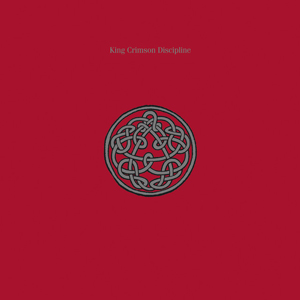
Levin: Very good question. I didn’t know it was King Crimson. I had played with Robert Fripp, who those who don’t know, Robert founded King Crimson way back in the [late ’60s] and changed members, line-ups many times, but I didn’t really know or care about that. I played with him on Peter Gabriel’s first solo album in 1976, and I toured with Peter. Robert was in that band for a year or so, so I was very familiar with his playing. Robert asked me to play on his solo album called “Exposure.” Then a year or two after that, maybe some months, “What do you think, Tony, about getting together in the studio and trying out this new band?” And it was two other guys, Adrian Belew and Bill Bruford, amazing players who I should’ve known about, but I didn’t and we played one afternoon. It seemed really great and we all said, “Let’s form a band.” Robert’s idea was to call the band Discipline, not to call it King Crimson, so we wrote music at great lengths. We went to England and created this album, which we called “Discipline” and we started touring as Discipline. Then one day Robert said, “You know what this is? King Crimson. King Crimson has kind of spoken to me.” I’m not sure he said these words, but King Crimson spoke to Robert and said this line-up should be called King Crimson, and henceforth, we released the album as King Crimson with the title “Discipline” and that’s how we toured from then on.
What did you think were the biggest differences in the group’s material from the 1980s compared to all that came before?
Levin: I really wasn’t familiar with King Crimson. I had heard maybe a track or two of theirs, but I just didn’t know the history of the band and it was only after I was in the band that I started listening to the past material. In other words, another way of putting that is it wasn’t the sensibility of the band to copy the style it had done before, but much more to carve out new territory and do new things. We were very much immersed in doing that in the early ’80s.
 Actually, those first tours in 1981, ’82, ’83, much to the chagrin of the Crimson fans in the audience, we weren’t doing past material. We were just doing new material, so it was only later that I actually listened to it and learned the bass parts. In the ’90s and then again even more in the 2000s, I toured with King Crimson, playing in addition to the “Discipline”-era, the early material of King Crimson. It was great music and I certainly learned it then. [It was] very challenging for me in an interesting way because when the bass part is really special, an iconic part of what that piece is, you want to save that bass part, but you also want to be yourself if you’re a player and not in a cover band. So that was an interesting musical challenge for me on tour with King Crimson, how to stay true to the nature of these wonderful bass parts before I was in the band.
You’ve stated you don’t listen to past recordings very much, but based on memory, how would you trace the progression from “Discipline” to “Beat” and “Three Of A Perfect Pair”?
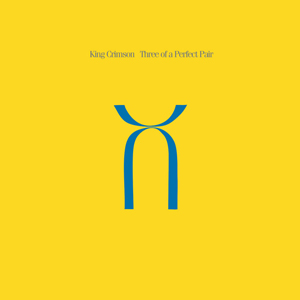
Levin: Yes, I don’t go back and listen for fun to albums I’ve done, but of course I did listen to the material when we formed BEAT because we were going to play the material and I didn’t exactly remember. The progression from album to album, what I could hear in it was we were trying to be different. As successful as the album “Discipline” was, when we did the second one with that line-up, “Beat,” we were trying to be quite different. We were saying, “Let’s put that all aside.” I’m not saying we were successful in that. It’s up to the listener to determine. Maybe it sounds exactly like the same band playing in the same style, but I think it’s significant that we’re trying to carve out new territory. Again with the third album, “Three Of A Perfect Pair,” we were trying to carve out as best we could to carve out, to actually be a progressive band, not to just be in that genre called “progressive rock” or “progressive music,” but to be progressive and step beyond what we did last time.
Where did the material land compared to what was happening commercially and on MTV?
Levin: I’m not an expert at that either, but yeah we did a dreadful video or two because the label, Virgin Records, wanted us to be on MTV cause everybody was, but we understood that we were quite outside the pop genre. Even if we got on, even if we brushed our hair, those that had hair, I don’t have hair myself (laughs), even if we combed our hair and tried to look contemporary, we just don’t fit into that normal mode of long-haired bands. Although we had a video or two and we had a label who tried to get singles played on the radio, I don’t think they were particularly successful, but a band like King Crimson, if it’s lucky enough, has a following who buy enough of their records. This is back I’m talking about in the ’80s and in the ’90s. [Selling] enough records and CDs, that and touring can support the band. We don’t really have to be what we’re not, which is a pop band or a band that’s gonna get a lot of airplay on the radio.
 Were any of those attempts able to expand the audience beyond a cult following?
Levin: My recollection is we sold about equally well, about 250,000 or 300,000 albums, from “Discipline” and then continuing for the next two albums. I don’t think it helped, but it’s an uneducated guess. I don’t follow the numbers. It’s not really part of what I do. Actually, an interesting parallel but different is Peter Gabriel. His first solo album, having come from Genesis, was very much a cult following, a good one and a big one. But then through coincidence, MTV and some really fantastic videos he did, suddenly the audiences grew and he was playing much bigger places, but still there were those passionate fans from the old days.
After this tour is completed, what’s on deck for you with Peter Gabriel?
Levin: I wish I knew (laughs). This I know. He’s continuing to release one song a month on the internet that people can listen to for free. He does it every full moon, there’s a new one, and like the fans, I’m right in there [waiting for the next one]. Even though I recorded them a year or two ago, I’m eager to hear how these songs [turned out]. They’re great material. One might assume because he’s been doing it since January and there are 12 tracks that he’ll release an album at the end of the year pretty soon, but I don’t actually know. As much as I talk to him, we don’t talk about that stuff. I know he’s not going to tour next year because I’ve asked him. Of course, I would clear out my schedule for him if he was gonna, and like any fan of Peter’s, I hope that he tours in the year after that.
How has intertwining your time working with both camps rubbed off on one another?
Levin: Interesting parallel. The main thing that I remember was it was difficult in the ’80s. We didn’t have the internet. I think when faxes came out, I asked both management companies to get fax machines so we could communicate with each other about when one tour ended and the other tour started. The music of the two tours didn’t really coincide. They’re pretty different kind of acts. Peter, of course, always has a great big show with a lot of technical, fun things, lights, running around and jumping. King Crimson is very formal compared to that, so there’s not too many parallels in my memory having been a member of the two when we were both touring, besides mostly how to communicate between the two bands, especially when you’re in different continents, and make sure the schedule is possible.
This is probably more specifically for Robert to answer, but do you foresee King Crimson ever reviving itself in any format?
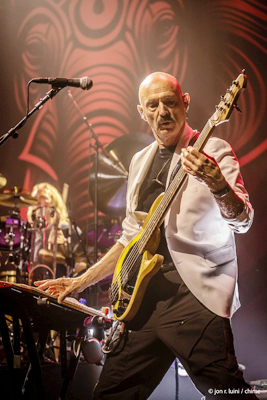 Levin: When we last toured Japan [in 2021], we knew we were gonna end the incarnation of the band. I had breakfast with Robert and I said, “I don’t expect you to tell me the future, but what do you think?” And he said, “Well, we’re done, but if King Crimson speaks to me, then I will listen.” Those were his words and I can’t interpret that any better than anybody else, but the sense I have is there is no King Crimson being planned, but if somewhere in Robert’s sensibility it seems like something new and special could happen, then it will.
Will BEAT continue, and if so, what are some possible plans?
Levin: There are no plans at all and Steve Vai is busy for the next year. He has said in interviews that this will be the last tour of BEAT, so I don’t know. Even whatever you say in an interview, you don’t really know what the future is going to bring, but there are certainly no plans for BEAT tours. This is the last one we’re planning and the future will speak to us like with King Crimson. We don’t really know, but the rough idea is it’s gonna be at least a year or more before we’ll even talk about doing anything else.
Will there be any artifacts from the tours in terms of recordings or your photography?
Levin: We record every night, so an album is always a possibility, a live album. I haven’t heard any plans specifically to record a specific concert for an album. There could be but I don’t know. Again, I’m just the guy playing and taking photographs during the show. I do that a lot and just a few days ago announced the release of my photo book called “The Book Of Beat,” which is my photos from the 2024-2025 tours with the band. I worked really hard. I have tens of thousands of photos from onstage, backstage and traveling. I worked for over a year getting it together and it’s just come out. It’s on my website called TonyLevinMusic.com.
When it comes to your body of musical work, what do you hope listeners will take away?
Levin: Gee, I don’t think about that. I’m a bass player. I’m very lucky to be busy and have a lot of work. Any musician who’s freelance, we’re lucky to have work. There’s no special wish for something beyond that. The victory is getting to play the music and getting to share it with people who appreciate it.
BEAT performs at the Riverside Theater on Monday, October 19 and the Copernicus Center on Wednesday, October 21. For additional details, visit BEAT-Official.com, PabstTheaterGroup.com and CopernicusCenter.org.
Related Articles
 King Crimson gears up for golden anniversary with reflections from ace bassist Tony Levin
 Trey Gunn talks Security Project, Peter Gabriel, Progtoberfest, plus time in King Crimson
 King Crimson’s Robert Fripp, David Singleton humorous, insightful in City Winery Q&A
 A saucerful of “Insolo” secrets from Gary Kemp of Spandau Ballet and “The Bodyguard”
 ELP/Asia drum titan Carl Palmer closes Progtoberfest II in honor of longtime collaborator Keith Emerson
 The Security Project stages an all-star salute to Peter Gabriel at second installment of Progtoberfest
 “The Absence Of Presence” persists, but co-founder Phil Ehart confident in rejuvenated Kansas
 The Moody Blues and “B Yond” with Rock and Roll Hall of Famer John Lodge