
Roxy Music’s Rock & Roll Hall of Famer Phil Manzanera promises Space “More Than This”
 Photos provided by Charlie Targett-Adams
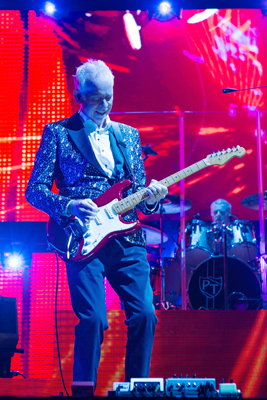
Rock & Roll Hall of Famer Phil Manzanera is a man who wears numerous hats, from playing lead guitar since the start of the England’s art rock, glam and sophisticated pop icons Roxy Music in 1970, to a vast body of solo work, plus writing, producing and session playing for other A-listers across the international spectrum.
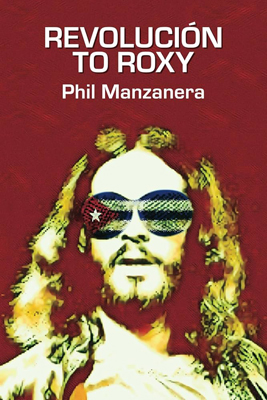
It’s no wonder why he has tons of tales to tell and photos to present throughout the memoir “Revolución To Roxy,” in addition an ambitious audio companion that helped shape multiple generations of alternative artists on both sides of the Atlantic.
Each of those projects will be the subject of “An Evening Of Words And Music With Roxy Music’s Phil Manzanera,” which comes to Space on Monday, May 18, featuring a live interview conducted by Terri Hemmert, DJ at WXRT-FM.
In the meantime, the living legend phoned Chicago Concert Reviews for a fascinating preview of those pages, including how Roxy Music’s mystique was birthed alongside David Bowie, a childhood connection with Pink Floyd’s David Gilmour, a couple strange supporting slots for Steve Miller Band and an even more unlikely sample by Jay-Z and Kanye West, further demonstrating the vast nature of spending nearly six-decades behind just as many strings.
 What comes to mind when you think of performing around Chicago?
Phil Manzanera: I tell you what comes to mind is 1972, New Year’s Eve supporting Steve Miller Band (laughs) in Chicago [at the Kinetic Playground]. It was like an out of body experience. It was our first tour out of the UK. We’d been playing in small clubs and then we had this promoter [who had us do] anything he could think of that would get us around. It was really great, except I do remember a real “Spinal Tap” moment. We were down below the stage and we couldn’t find our way to the stage. It sounds ridiculous, but some of those old theaters were really weird down below.
Funny enough, we had supported him on the 18th of December in San Francisco, Winterland [Ballroom], but we were like third on the bill. It was Steve Miller Band, Mike Bloomfield & Friends (laughs) and Roxy. We played for about 25 minutes, and goodness, what people thought? “Who are these bunch of freaks?”
How would you describe the upcoming evening you have planned for Space?
Manzanera: It’s called “Words And Music.” I’ve done it about 20 times all over the world and it’s based on my memoir, “Revolución To Roxy,” but I do play about 20 minutes. The whole thing lasts for around an hour-and-a-half. There are two halves of 45 minutes with an interval. I sign books and then we just have a chat about music, about all the different people I’ve worked with, where I’ve came from, why I have 16 cousins in Columbia (laughs). My Dad was a spy and we lived in [several] places…We lived during the Cuban Revolution in Havana. That’s where I first picked up a guitar. My mom was teaching me. A lot of rock and rollers, especially British guitarists, you ask them how they started and it was in skiffle, [being influenced] by The Shadows, Cliff Richard and they all bought this book called Bert Weedon’s “Play In A Day.” That’s not for me. I was brought up playing Cuban folk songs. Those are the kind of songs that we eventually heard with the Buena Vista Social Club (laughs), not mambo, or salsa, or anything like that. I have a very different trajectory, so I talk about that and I play stuff, and you know, rock out (laughs). We’ll see what I do.
What message are you hoping to convey with both the book and album?
Manzanera: Accident of birth can lead you anywhere, for good or for bad, and I just happened to be in the right place at the right time. I met David Gilmour when I was 15, the week he joined Pink Floyd. I met a guy called Robert Wyatt [from Soft Machine] when I was 16…I was living in Venezuela. I begged my parents to send me to England to boarding school when I was nine and ended up in South London. I was just in the right [place when] The Beatles happened, The [Rolling] Stones happened, The Kinks happened, Jimi Hendrix happened, Pink Floyd happened, the Cream happened. It was just amazing, and that sort of led me to [my career] and here I am like 65 years later.
 Roxy Music is how many came to know you. How would you explain its evolution?
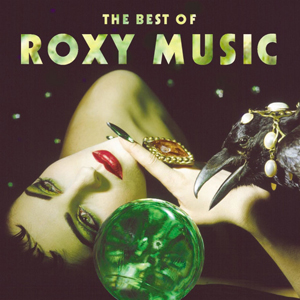
Manzanera: We were a bunch of six to start with, unusual sort of people that got together…but we created a sound. We all had our different guitar heroes, and pop bands, and rock band heroes, but we had certain things in common, like we all loved The Velvet Underground or we all like Tamala/Motown…
Then people came, people left. The bass player, [Graham Simpson], was the first to leave after the first [self-titled] album. Then two years later, after we’d been to America, [synthesizer player] Brian Eno left [becoming an avant-garde solo artist, plus eventual producer of David Bowie, Talking Heads and U2]. Then we got a guy who was really technically very good, Eddie Jobson, [later of Frank Zappa’s band and U.K.], and then the band evolved and we could do different kinds of moods. We were always trying to do something different, so in the end, we ended up doing eight albums and no new albums after 1983 with “Avalon.” Then we split up and then we got back together again. We split up and we got back together again. We split up (laughs) and it’s sort of the normal rock and roll band tale, but luckily, we’re still all friends.
In what ways do you consider the group to be pioneers?
Manzanera: People say that we’re innovative. Just like many bands, we influenced a lot of people just like we were influenced by lots of people…I had like a prog rock band before Roxy, very, very different called Quiet Sun. Then we did that kind of music when I formed a band with Brian Eno after he left Roxy Music called 801 and different kind of music. We’re all still doing different kinds of explorations in music, whether it’s [singer] Bryan Ferry, Brian Eno, [saxophone player] Andy Mackay with me or [drummer] Paul Thompson. There was a sixth player, [Graham Simpson]. He unfortunately passed away a few years ago, but five of us are still doing stuff at this advancing age (laughs).
Will there be any more tours together or was the 50th anniversary your finale?
Manzanera: The 50th anniversary was the farewell tour, and when we did the farewell, it really fared well. It was very moving and great to see the people in the audience, in Chicago [at the United Center] singing along and the resonance that some of the songs, particularly like “More Than This” or “Avalon,” still seem to have some sort of appeal to people. It’s very nice to see people grooving on that and we were able to, for the first time ever really, to play the music and have all the visual context correct. It was the only time ever, so it was very pleasing and quite appropriate that we managed to do that before we said goodbye. We’re all doing other projects now, but not as Roxy.
 What role did those iconic visuals and the glamorous artwork play in the mystique of Roxy Music?
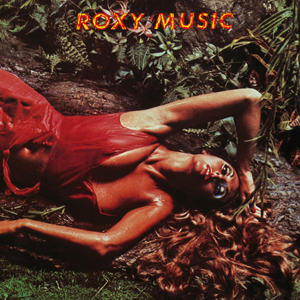
Manzanera: It was incredibly important. The iconography of Roxy is so much a part of the whole package and it always was. Really, the very simple mission statement, if you like, was to do interesting and different music, but present it in an attractive fashion. Having guys who’d been to art school and were very much into the visual arts and fashion, stuff like that, it all came together. Our first album, [featuring model Kari-Ann Moller on the cover], was released on the same day as David Bowie’s album “Ziggy Stardust,” and a week later, we were playing together at a pub in Croydon. He was a little ahead of us and invited us to play with him at the Rainbow Theatre in London. It was the start of a new cycle of more visually-aware musicians, which lasted up until punk came along, which was another cycle of visually interesting and socially aware music. It’s like passing on the baton.
What are your thoughts on finally being inducted into the Rock & Roll Hall of Fame?
Manzanera: We were very surprised and very, very pleased. It was such a thrill to come out and play. It was at the Barclays Center [in New York]. It was big. You had so many great people at the tables near us and it felt like a very special evening. The table to the right, there was Fleetwood Mac and there was Janet Jackson. The Zombies and [Queen’s] Brian May were there. I got to meet Little Steven Van Zandt [from Bruce Springsteen’s E Street Band]. We did this track called “All The Young Dudes” with us all playing along together at the end. It was just a real dream come true.
Beyond the band, what led you to becoming such an in-demand producer, player and writer for so many other iconic acts besides to your own projects?
Manzanera: Well, just my love of music. I like all different kinds of music cause I was brought up in South America. I can speak Spanish and I understood the lyrics being written from Argentina, from Columbia, from Puerto Rico, from Mexico, from Spain, a lot of the people that I produce, like Enrique Bunbury winning a Lifetime Achievement Award at the Latin Grammys last year. That really [makes me] proud that I’d be useful to these guys. I started doing more Latin in the ’90s, but getting a chance to produce and work with the people from The Velvet Underground, with Nico and John Cale, and then even Split Enz, which is celebrating its 50th anniversary, the Finn Brothers [Tim and Neil], to meet them when they were young and work with them. It is a variety in my musical tastes, but it’s such a joy to meet these all these different, talented people. I mean David Gilmour, I never dreamt I’d end up co-producing any of his albums or even a Pink Floyd album (laughs). The younger me, I would laugh and say, “You must be joking mate.” I live next door to David Gilmour now. I’ve known him since I was 15. It’s just a lovely sort of world. I feel so lucky. I just happen to be in the right place at the right time.
 You also co-wrote a track on a Pink Floyd album. Even with your superstardom, that’s the next level. What was that like?
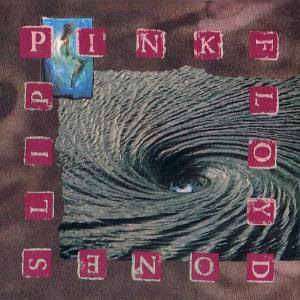
Manzanera: Now that you mention it, I can’t quite believe it! Yeah I did “One Slip.” “A Momentary Lapse Of Reason” was the name of the album. Yeah, I’m very proud when that came out. I think they tried to minimize my name (laughs) because they didn’t want to be seen as having any other writers, but I can’t believe it, yeah. If you grew up listening to the first Pink Floyd when you were like 15 or 16, to have a co-write on a Pink Floyd album is ridiculous that it happened. I feel a bit like Forrest Gump, all these things that have happened. That’s why I wrote the book, trying to make sense [of it all]. What the hell?
What was your reaction to the guitar sounds of “K-Scope” being sampled by Jay-Z and Kanye West on “No Church In The Wild”?
Manzanera: That was just a complete [shock]. I thought they made a mistake actually. They rang me in the car, Roc-A-Fella Records. “They sampled you.” Now, I said “whoa, whoa, whoa, I think you made a mistake, cause people always get my name mixed up with Ray Manzarek from The Doors, so thanks, but it’s him.” They said, “No, no, we’ll play it to you over the phone. Obviously, I can’t send it to you. It’s top secret.” So I stopped in the car and my son actually recorded the phone conversation, which I didn’t realize that he still has and played it for me the other day. I’m saying, “Well, it does sound like me…slowed down a bit. Oh, that’s great. Thanks, bye.” I put the phone down and I thought, “Well hang on, can they do that? (Laughs). They said, “It’s coming out next week,” so they didn’t ask me (laughs). Anyway, I rang up Virgin Records and they said, “Look, don’t worry, we know all about it and you’ll be very happy. You’re getting more than they are.” “Really?” Then I rang the publisher. “Do you know anything about this?” “Oh yeah, don’t worry, you’ll be very happy.” It won a Grammy. It was in all these films and things like that, so I was very happy. The fact that Kanye turned into a bit of a looney is slightly annoying (laughs), but Jay-Z, yeah, he’s on the radio still, so that’s fine (laughs).
The book is filled with these sorts of unbelievable moments. Does anything else unexpected come to mind that you might be sharing during your tour?
Manzanera: I always say to the person interviewing me, “I don’t want to know what the questions are, but you might get the same stories (laughs) whatever the questions.” One of things we talk about is when I worked with Bob Dylan, which was like an out of body experience as well. It was more confusing. That’s the kind of thing we talk about. Sitting eyeball to eyeball with Bob Dylan. The bubble in your head is saying, “What am I doing here?” I think he thought I was Mexican really, but that’s a long story. It gets quite funny.
This conversation will be moderated by Terri Hemmert from WXRT. Tell us a bit about your relationship with the radio station.
 Manzanera: I don’t have any, to tell you the truth, but she was suggested. When I Googled her, I thought, “wow, this lady is very impressive,” so I’m looking forward to finding out what the questions are. The reason I like not knowing what the questions are going to be is because they read the book, then they can choose anything they want to talk about, or we can just talk about the music business, or the way the whole thing changed, or production, or who knows what we’re gonna talk about. It’s up to her and she’s a very knowledgable lady, so I’m really so excited about being interviewed.
WXRT played Roxy Music since the beginning.
Manzanera: Really?
Absolutely.
Manzanera: Oh wow! Oh great!
It does feel like you’ve stayed a bit under the radar here in America compared to how enormous you are in England. Why might that be the case?
Manzanera: The obvious thing is America is so big. It’s got so many diverse people with different interests. The whole rock and roll stuff is in America, but coming and bringing stuff to America is not easy for British bands unless you’re The Beatles or The Stones. Bowie found it very difficult to start with, but once he did the “Young Americans” album and embraced the American groove, he took off. I guess maybe we should’ve been more calculated like that, but we just followed our noses and created the stuff, which maybe wasn’t as accessible to American audiences, until we did “Avalon” when things started to sort of take off. That’s when we stopped working together for 18 years, because that’s the kind of crazy people with no career planning that we were. [We] still have no business sense at all and just follow whatever (laughs).
It sounds like you simply go with the flow, but do you have anything else on the calendar?
Manzanera: Yes I do. I’m doing a couple of gigs here in the UK in July, but Quiet Sun, which released a lot of material that was used in “801 Live,” we’re doing a special anniversary edition of that, [the album “Mainstream”], coming out in the beginning of August. It’s gonna be out on vinyl and all those kind of things, specially packaged with a book. Then the beginning of maybe November, we’re going to release a brand new Quiet Sun album full of new material, which is totally different kind of music than Roxy or stuff I’ve been doing for the last 45 years, so that’s in the cards…And we have the Roxy Music box set of the second album, [“For Your Pleasure”], coming out in September, which has lots of unheard stuff and film stuff that no one’s seen before, so that’s very exciting.
You’ve done it all, traveled the world and worked with everyone, but what keeps you going?
Manzanera: Well, just the love of music. This is what I do. I’m producing a French singer. I’m curating old stuff. I’m coming out and chatting with people. What’s great about coming to these book talks is I get to talk to people when I’m signing the books. It’s very endearing to hear the stories of people. They say, “I came to see you in 1984, or ’75, or ’79. I love that song. It stays with me, has particular resonance.” That’s why I like doing these book tours because they’re small. It’s not like playing in a big arena. You get to actually meet people and they can ask questions. That keeps me going and it’s fun!
Phil Manzanera speaks and performs at Space on Monday, May 18. For additional details, visit Manzanera.com and EvanstonSpace.com.
Related Articles
 “Love Is The Drug” at United Center as the artful glam of Roxy Music reaches a half-century
 Arcada anticipates the gift of renowned artist, actress Darlene Love’s “Love For The Holidays”
 “Surf’s Up” Des Plaines, Arcada as Al Jardine, Pet Sounds Band honor fellow Beach Boy Brian Wilson
 Bill Medley and The Righteous Brothers bringing back that “Lovin’ Feelin’” for the Genesee
 Former Traffic, Fleetwood Mac member Dave Mason “Feelin’ Alright” about City Winery stops
 Jeff Skunk Baxter eying Allstar Jam armed with “Speed Of Heat,” Steely Dan, Doobie Brothers
 Take the Train to Ravinia for another Legend-loaded summer under the stars
 Celestial Yes singer Jon Anderson recruits “1000 Hands” for vision three decades in the making