
A soulful, bluesy John Oates & The Good Road Band wind their way to the Genesee Theatre
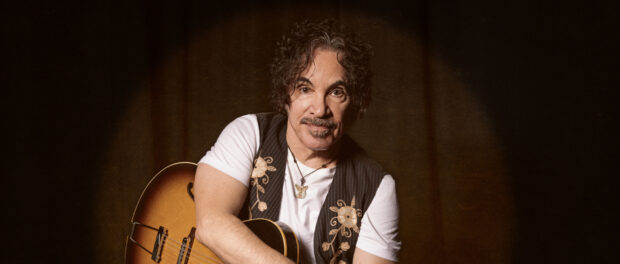 Photos provided by Nick Spanos and Jason Lee Denton
In his solo work, John Oates has embraced a remarkably unique array of styles and sounds, incorporating elements of rock, soul, pop, Americana and more throughout a collection of music that finds him exploring everything from contemplative singer songwriter to full band rocker.
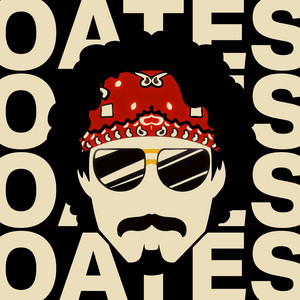
On his latest album, “Oates,” the songwriter drills down on R&B throughout a record featuring guest spots from Nashville-based soul singer Devon Gilfillian and New York pop-soul group Lawrence.
Properly recreating that music live on stage requires a great rhythm section, with Oates building his new Good Road Band around that specific goal. Gearing up for a performance Saturday, March 7 at the Genesee Theatre in Waukegan, Oates and company have worked up a set featuring everything from his solo work to Hall and Oates hits, alongside a carefully-curated handful of covers, which double as a masterclass in the history of R&B and soul music.
Chicago Concert Reviews spoke with Oates about the history of the blues, the influence of local soul group the Five Stairsteps and songwriter John Prine, a fond memory outside Chicago Theatre and what’s in store Saturday night at the Genesee.
 Let’s start with Chicago musically. You incorporate so many different sounds into your solo work. Are you a fan of Chicago blues?
John Oates: I’ve never been much of a performer of Chicago Blues, big city blues. I was more oriented toward the rural blues that kind of came up the river and led to the Chicago blues. But I always saw that as really interesting, just from a kind of a musicologist or a musical history point of view. I used to talk about that a lot during my acoustic shows, kind of the evolution of the blues, and American pop music in general, coming up from the deep South and stopping along the way in St. Louis and Memphis and onto Chicago and then evolving into big city blues – and rock and roll in fact. So, I’m more interested in it from that point of view rather than just what most people think of as Chicago blues.
I see you’re working up a little Chuck Berry in the set these days. Is that musicologist in you a Chess Records fan?
Oates: I am, yes! Of course. I like a little of everything. But, yes, Chess Records for sure. All the great music that came out of Chicago. Even moving forward from that, Curtis Mayfield was a huge influence on me. The Five Stairsteps. All that stuff. But especially the Five Stairsteps. They were actually on the same bill when I met Daryl Hall. There was that early gang fight that we kind of escaped. Well, they were actually there! And, of course, Daryl and I covered one of their songs [“O-o-h Child”] on the “Our Kind Of Soul” album.
But the Chuck Berry song is interesting because when you do a Chuck Berry song, it makes you feel like you’re in a bar band, you know? So, what I did was I took the lyrics and most of the melody from one of my favorite B-sides, which is “Let It Rock,” and then I combined it with really the groove and the chord changes of “Maybellene.” I just had this wacky idea that I would do it that way and kind of try to make it my own without offending the Chuck Berry legacy. Because I really think he might be one of the greatest rock and roll lyricists of all time.
Again, one of the things I love so much about your solo work is all these different sounds, whether it’s the soul stuff, the Americana stuff, the more acoustic stuff or the more R&B type of stuff you’ve been doing lately. And when I think of Chicago, I think of the same thing: I think of Curtis Mayfield, I think of John Prine, I think of Buddy Guy or Kanye West or Wilco. There’s all this different stuff. Any favorite Chicago songwriters or musicians for you?
 Oates: Well, John Prine. You just said it right there. I’m a huge John Prine fan. John Prine, and Daryl and I, started our first albums together at Atlantic Records at the same time with Arif Mardin producing both of us. So, I go way, way back with John even though Hall and Oates is not always associated with John Prine.
Over the years living in Nashville, I’ve jammed with him on occasion. More recently, a few years back, when they were celebrating his life after he passed away, I got to perform at the Ryman and do one of his songs. I recorded it on the Reunion album. “Long Monday.” How do you pick just one of his songs? They’re all so great, right? But anyway, yeah, there’s a lot of synergy between all of that stuff for me.
Well, from the outdoor amphitheaters to the suburban arenas and the clubs here in the city, obviously, you’ve played them all. Any fond moments that stand out for you on stage in Chicago?
Oates: Yeah. But it might not be what you think. I remember back in the ’70s, Daryl and I were touring and opening for various acts. We were all excited about playing the Chicago Theatre. We were opening for Dr. John. I remember pulling up to the Chicago Theatre. I looked at the marquee and I actually took a picture of it. Because it was so funny. If you can picture it in horizontal letters, it said “Dr. John Hall and Oates.” So, it looked like “Dr. Hall and John Oates.” That was one of my highlights in my touring career in the ’70s.
I caught you the last time you were through Chicago at City Winery. And I see that a lot has changed about the band and the set since then. What can fans expect in Waukegan?
Oates: Well, if anyone’s come to see me in the last few years, they’ve probably seen the acoustic singer/songwriter-oriented set where I really, really focused on the stories and had an amazing acoustic quartet with a cello and a pedal steel and a percussion kit. And that’s been a wonderful show to do. I will still trot that out sometimes because it’s just fun.
 But I just started writing some kind of more R&B and soul-pop oriented type songs. And, to pull those off properly, I needed a real rhythm section. So, I put together a rhythm section of two old friends. John Michel, who I’ve been playing with. He’s originally a New Yorker, but he’s been living in Colorado for over 30 years. And we met out there. And then Kevin McKendree, who played on my albums, is going as far back as 2007. And then two new guys who played on my new album.
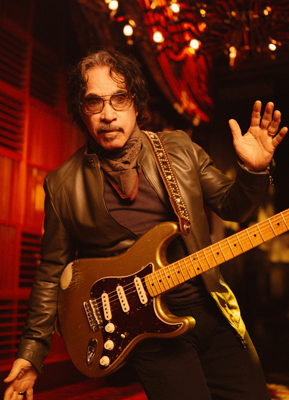
So, I combined a little bit of the new and the old. And they’re just a great rhythm section. I have to say, other than the ’80s Hall and Oates band, I think this is the best band I’ve ever played with. They’re versatile and they’re fun. They’re amazing singers, amazing players and we can pretty much do anything. It’s just really fun for me to, after doing a couple years of acoustic, to plug into an amp with my Stratocaster and really rock out a little bit more. But I don’t lose the roots and kind of the storyteller aspect. I still talk a lot during the show and I tell a story, some of the backstory.
One of the things that’s evolved in the course of doing this is, I call it “the songs that made me.” And what I like to do is do different songs on different nights. I’ll pick a Curtis Mayfield song or I’ll pick, as you said, a Chuck Berry song. I’m doing a Smokey Robinson song. People understand what I’m doing in my new songs when they hear what I’m doing with the old songs because they can see that musical DNA that I have – that that makes me who I am now. They can see where it comes from in the way I sing: the style, the Curtis Mayfield-esque falsetto, the chord changes of a Smokey Robinson song, all of that.
So, it seems to connect with people in a better way. And I have a lot of fun doing it. Because, now, not only do I have all these great Hall and Oates hits, but I have a lot of my own. Now, I have the entire world of amazing songs to play for people. And it just makes the show richer. So, that’s what this show’s about.
John Oates & The Good Road Band perform at the Genesee Theatre on Saturday, March 7. For additional details, visit JohnOates.com and GeneseeTheatre.com.
Related Articles
 John Oates sets up a living room inside the Genesee, decorated by blues, solo and hits with Hall
 Double Hall of Famer John Oates redefines “Reunion” acoustically for a sold out City Winery
 Bill Medley and The Righteous Brothers bringing back that “Lovin’ Feelin’” for the Genesee
 Arcada anticipates the gift of renowned artist, actress Darlene Love’s “Love For The Holidays”
 Take the Train to Ravinia for another Legend-loaded summer under the stars
 Together and apart, Daryl Hall and John Oates, Train turn in United Center sing-a-long
 Jerry Martini and The Family Stone want to take Genesee “Higher” as they “Dance To The Music”
 Genesee Theatre soaks in solo, duo sides of Daryl Hall, Glenn Tillbrook’s take on Squeeze