
Foreigner’s original “Juke Box Hero” Lou Gramm is “Released,” returns to Arcada and Des Plaines
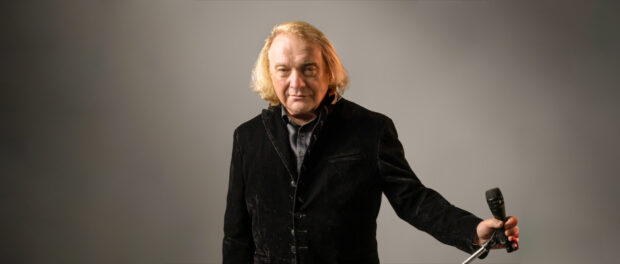 Photos provided by Krishta Abruzzini
Retirement was right around the corner for original Foreigner singer and solo star Lou Gramm, but after rediscovering a few previously unreleased tracks, he put the finishing touches on them and started writing some new ones as well.
The results made their way onto the aptly titled “Released” album and sparked at least a couple more chances to catch one of the world’s most iconic voices in concert, starting with the Arcada Theatre on Friday, July 10, followed by the Des Plaines Theatre on Saturday, December 19.
The “Juke Box Hero,” who miraculously beat a brain tumor, called Chicago Concert Reviews to explain the entire concept behind his first new individual collection since the late 1980s and trace what it was like fronting the Rock & Roll Hall of Famers at various points throughout five decades, including their latest live recording, “In The Eye Of The Storm.”
There was talk about you coming off the road, but what made you want to continue?
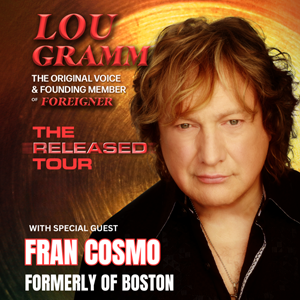 Lou Gramm: Because I had enough material for a new album and I really wanted to put out a new album. I hadn’t put one out in almost ten years [since “The Lou Gramm Band”]. It took a couple years and I got this album put together. It’s called “Released” and it’s really a terrific album. All the guys in my live band are playing on it and the songs are mostly new. It’s fun to play live and I think the response we’re getting is really good, so I couldn’t just retire in the face of that, you know?
What comes to mind as you return to the Chicago area?
Gramm: I want to make sure that the Chicago shows are acoustically and performance-wise the best that we can make them and a little quirkier than we’ve been in the past. It’s booked as our last tour. I wanna give Chicago and all the cities something a little different from Foreigner.
You’re specifically on the way back to both the Arcada and Des Plaines Theatres. What else can fans expect?
Gramm: I’ve heard that too. Isn’t that great? It’s two shows in the area, one now, then the other one’s in December. I released the new album about six weeks ago and it’s doing very well, getting a lot of airplay, climbing up the charts. We’ve integrated about three or four songs from the new album into the hits that we’ve been playing for the last couple of years and I think it’s gonna be a real knockout live show.
What are the origins of the previously unreleased recordings?
Gramm: The ones that were older ideas were ones that I thought were really good, but they were supposed to be on one of my earlier solo albums and I ran out of time. The record company gives you an allotment of time and whatever you’ve got complete is gonna be on the album. There were some really good songs that I was trying to complete. They didn’t make the album, but I never forget about ’em.
 Can you explain the connection between “Time Heals The Pain” and Foreigner’s comeback hit from the ’90s, “Until The End Of Time”?
Gramm: Um, I don’t think there’s a direct connection, but it’s kind of got that mood, doesn’t it?
I feel like there’s a quotation in the lyric.
Gramm: Tell me.
“I thought that love was a cross on my shoulder. With age came wisdom, and I feel so much older.” I believe there’s a variation of that in “Until The End Of Time.”
Gramm: Is that right? Don’t tell me I’m repeating myself…Interesting. I like it. Is it in the same melody and everything or just the words?
It’s a similar melody. I wonder if it subconsciously foreshadowed that track?
Gramm: I’m gonna have to sue me. (Laughs)
Given the wide amount of years between when this material was recorded, it has both classic and contemporary elements. Tell us what you wanted with the sounds.
Gramm: I think the mood of some of the older songs were possibly a little darker than the newer things that I’ve been writing about. We wanted them to work together, so we had to make sure that the songs that were a little darker weren’t too dark because we wanted them to go with the uptempo, upbeat in mood songs. We had to temper the anguish a little bit so it worked with everything else.
Where do you think this fits in your extensive solo and Foreigner catalog?
Gramm: I think it’s definitely a solo album, and while I enjoy doing Foreigner very much, I think in the last eight to ten years, I’ve really put more attention to my solo work and I’m getting a lot of satisfaction from it.
 What was it like when you first began establishing yourself outside the group?
Gramm: I let [Foreigner co-founder/guitarist] Mick [Jones] and the guys know I had a lot of ideas and some didn’t quite go with what we were doing while we fly the Foreigner banner.
I told them there was no offense to them and I loved what I was doing with Foreigner, but I had to express myself in other ways before I was unable to express myself, so I think they understood and I’m very proud of my first solo album, [“Ready Or Not”]. That really cracked the nut. I had no idea how that was gonna be received, and between “Ready Or Not” and “Midnight Blue,” it was gangbusters.
How did each of your solo records have their own flavors?
Gramm: Well, I think “Ready Or Not” was very uptempo and upbeat. It was fun to write those songs, and when we recorded it, [most] everything just went the way we wanted it to. Of course, there were things that didn’t quite go the way we wanted to, but good things came out of that and we were all proud of that.
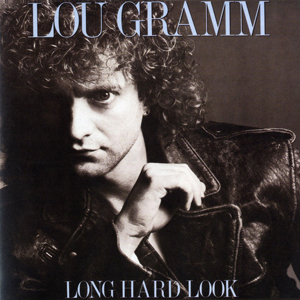
Then for “Long Hard Look,” I think those were a little more moody and a little bit darker, but there’s some great tracks in there too. I think that had almost like a Traffic flavor to it, the band Traffic, and now this album, I’m taking bits and pieces from both of the solo albums, from songs that were a really good idea, but unable to be completed in time to put on the albums. I think there were three or four. We went back and listened to ’em and completed them, put harmonies, percussion and things on it, and it developed its own character.
Going back even further to the very beginning, Foreigner auditioned around 50 vocalists before they selected you. What was it about your voice that clicked with everyone else?
Gramm: You know, I have no idea. Mick or none of the other guys ever told me, but they said I had a certain “something” that they felt the vocalist for this band had to have.
What made you guys so collectively unique in the second half of the ’70s?
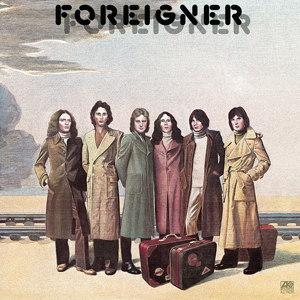 Gramm: I think there’s three Brits and three Americans…and the styles. The type of rock that we were brought up on and the British guys were brought up on was somewhat different. When it came together under one name, you could really hear the difference, but it was not a risky difference. It was an exciting difference.
How would you describe the group’s evolution throughout those early albums: the debut, “Double Vision” and “Head Games”?
Gramm: That was very exciting because Mick and I were just coming together as a songwriting team. We were turning out ideas that ended up being really good songs and we worked hard in making sure they were complete. The arrangements were interesting, not just a verse/chorus, verse/chorus. We made sure that our arrangements were interesting and I’ve gotta hand it to Mick for that. He really had some great ideas when it came to that, but I started learning too. The time of Foreigner “4,” I had some ideas too that we ended up putting on the album. It was an exciting time.
That “4” album was recently reissued. What are your reflections on that period?
Gramm: When we wrote and recorded Foreigner “4,” we were coming off “Head Games,” which we thought was gonna be a good, strong album, but for reasons that weren’t up to us, it kind of faltered and we were very disappointed in the results. We knew that when we were getting together to start writing songs for Foreigner “4” that we felt our career was banking on this new album, because if it was another so-so album, I think that could’ve been the end of the band.
In what ways would you say the group shifted its approach to be just as major, if not more so, throughout the 1980s?
Gramm: I gotta say that the producing had a big hand in it. And I think my writing with Mick was definitely more defined. We didn’t leave as much to any producer. When the earlier albums were out, we had very good producers and we left parts of the songs open for them to put their production skills into it. After “Head Games,” we got very good producers, but we also took more of a hand in the way those songs turned out.
What are your thoughts on the later albums, “Agent Provocateur” and “Inside Information”?
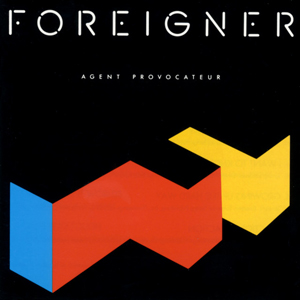 Gramm: I thought that was a really interesting period. I thought there were some good songs on those albums, but I felt that Mick was too interested in the synthesizers and keyboards and it started to sound like the album was almost based on that. He did very little guitar playing on the two albums after Foreigner “4.”
Even so, “I Want to Know What Love Is” is a global anthem at this point. What’s your reaction to how it’s been received?
Gramm: Oh, it is. It’s a wonderful song. Yes, I’m very proud of it. I think we all needed a song like that for a lot of reasons. I’m just very proud of it and I think the band did a great job recording it. The choir was magnificent and the production was just right. It sounded so good on the radio. I couldn’t believe it.
In addition to the group’s music being so iconic, so are its album covers. What are your recollections on the striking nature of the artwork?
Gramm: Well, we intended not to just stand up and have our picture. I think there might be a couple albums like that, the very early ones, but even those were done in such a way that they were very oddball. And they got a little weirder as time went by. I think the “4” cover is just unbelievable.
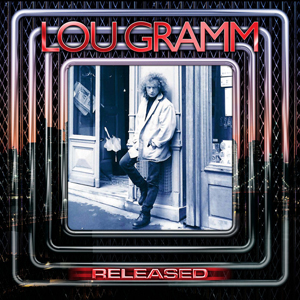
When was the photo that’s featured on the “Released” cover taken?
Gramm: That was taken, I think, the mid to late ’90s. I can’t remember where it was taken right now.
It’s sort of an extension of your other two covers and blends well with those.
Gramm: Yes, thanks very much. I think it’s a very cool cover.
After initially going on your own, how did you feel about your season fronting Shadow King?
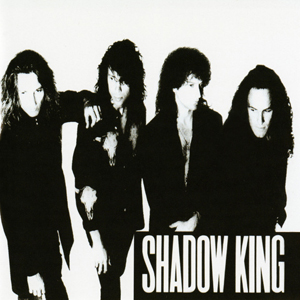 Gramm: I loved it. I think it had a lot of potential. There’s some circumstances that go along with that only album and the band that had never sat well with me and they still don’t. I’m not sure how much I can say or want to say, but I think that band had tremendous potential and it wasn’t handled so well in a number of different areas. When [guitarist] Vivian Campbell sensed that it wasn’t going well, we weren’t getting the promotion and everything we should have, he jumped ship for Def Leppard and that was the end of the band.
What led you to eventually reuniting with Foreigner on multiple occasions?
Gramm: Well, I know that Mick’s health was beginning to fail him…and I was pretty busy with my own band and stuff, but I knew that some important events were coming up, like the band’s 40th anniversary of our beginning and a number of anniversaries that tied into the dates that are in these past ten years, [such as] how many years the band’s been together, how many years since Foreigner “4” came out. There’s a lot of things that are notable and worth celebrating. Unfortunately, Mick is not in the best of health and hasn’t been performing with the new Foreigner in about two or three years. I had time in between some shows with my band, The Lou Gramm All Stars, and I jumped on board with Foreigner to help celebrate those dates.
You’re actually about to appear on their 50th anniversary concert recording, “In The Eye Of The Storm.” What’s the story behind that performance and project?
Gramm: Well, that was performed live. Of course, it was supposed to be performed outdoors and it was on Ellis Island, but just as we were taking the stage, the winds whipped up and it started to pour. There was lightning and we ran off the stage. Our crew took the instruments and put them inside the building where they had another stage. We set up, dried everything off and did the performance inside. It was a very good performance and it would’ve been nice if we were outside, but not in those conditions.
Is it pretty much a retrospective of the group’s five decades?
 Gramm: Yeah, I suppose it’s a retrospective. It’s our regular song list with a few extra songs added to it. Foreigner’s regular list is kind of a look back from the beginning to where we currently were.
The band is also the subject of a Broadway-styled show, “Feels Like the First Time: The Foreigner Musical.” Have you had a chance to see it yet?
Gramm: No, I have not. I’ve heard about it and I think sometime this summer I’m gonna see it with the guys in the band. That should be a lot of fun, but I’ve been hearing about it for the past six months. I’m hearing that they’ve been working real hard on it and it’s coming together. It sounds great. I just have been too tied up playing with other important things to be able to hear the finish product, but I’m going to.
When people hear your songs and story, what do you hope they will take away?
Gramm: That a modicum of talent and a crazy amount of determination can help you get where you want to go. I think having the right people around you is just as important as your own skills.
You’ve also overcome some tremendous health setbacks. What do you attribute your recovery to?
Gramm: I know my family has been helping me. They’ve helped me find doctors who are good at making people recover after a tumor like mine through holistic food, a modicum of exercise, stretching and things. There’s a way to go about it if you want to get back to the person you were physically and mentally. I’m still in that journey, but I do see that I’m doing better, and the better I do, the more I wanna do.
Out of everything you’ve accomplished, what are your proudest moments?
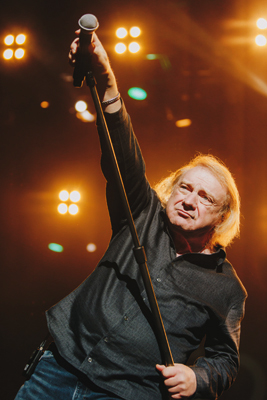 Gramm: I say one of my proudest moments was when Foreigner played the Atlantic Records 40th anniversary [concert at Madison Square Garden in 1988]. There were a lot of people there, including all the present and former Atlantic Records bands and artists. It was just so much fun.
Foreigner finally went to play “I Want To Know What Love Is.” I started singing the song, and when the chorus came, I heard a choir behind me, but I didn’t realize we had a choir up there. So I turned around to see who it was and it was all the singers from the Atlantic bands! That was the choir!
Would you have changed any part of your incredible history?
Gramm: I think there’s a few things, but it’s not even worth mentioning. I’ll mention it because I want to mention it. I wish I had been stronger mentally to keep my health together and to not succumb to the bad habits that I did.
Is there anything else left in the vault or did it all come out on “Released”?
Gramm: Oh, there’s more things in the vault and I’m starting to look through them, but I haven’t actually committed to doing anything else yet. I would like to do something like “Rock Of Ages” with some well-known artists playing prominent roles, and just do something wild and creative.
In the meantime, do you consider this to be your farewell project?
Gramm: I had a feeling that it’s my farewell project, but at this point, I can’t say that now because if something comes along that’s so exciting I can’t stop working on it, then they’ll be something else. But honestly, I would be totally satisfied with this being my last project.
Lou Gramm performs at the Arcada Theatre on Friday, July 10 and the Des Plaines Theatre on Saturday, December 19. For additional details, visit LouGrammOfficial.com, ArcadaLive.com and DesPlainesTheatre.com.
Related Articles
 Original Foreigner front man Lou Gramm offering Arcada and Des Plaines “One Last Look”
 Ex-Foreigner leader Lou Gramm’s “One Last Look” still “Feels Like The First Time” for Des Plaines
 “Walk On” with former Boston and Orion The Hunter singer Fran Cosmo, Voices at Arcada
 Voices Of Rock Radio’s John Elefante about to “Play The Game Tonight,” take Arcada to Kansas
 “Feels Like The First Time” when original Foreigner teams with current cast for “40” conclusion
 Latest Foreigner line-up winds up “Juke Box Heroes” in sizeable Venue At Horseshoe Casino sell out
 “Surf’s Up” Des Plaines, Arcada as Al Jardine, Pet Sounds Band honor fellow Beach Boy Brian Wilson
 Carl Palmer says “Welcome Back My Friends” as tech reunites ELP, retooled Asia ready