
“Totally Tubular” Thomas Dolby plans to blind Illinois with science and “Iconic 80s Recollections”
 Photos provided by Felix Goncalves, Kathleen B. and Carli Schultz
There’s so much more to Thomas Dolby than simply being the inventor of “She Blinded Me With Science,” although the fact it had such a prominent presence during the early days of MTV and new wave certainly helped put the English artist on the global map.
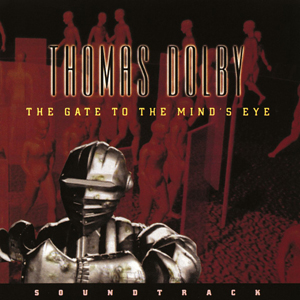
Ever since then, the “Hyperactive!” singer, songwriter, keyboard player, producer, composer and author continued a cutting-edge solo career, while juggling movie or video game soundtracks (“Howard The Duck,” “Gothic,” “Double Switch,” “The Gate To The Mind’s Eye”), founding the Silicon Valley software company Beatnik and joining the faculty of the Peabody Institute at Johns Hopkins University.
Even so, the electronic innovator continues to break away on occasion to headline the “Iconic 80s Recollections” Tour, coming to Chicago’s House Of Blues on Monday, April 20, and the “Totally Tubular” Festival, slated for Aurora’s RiverEdge Park on Sunday, August 16 alongside A Flock of Seagulls, The Motels, The Producers, Animotion, The Escape Club and Tommy Tutone.
Dolby gave Chicago Concert Reviews the entire rundown on such a varied resume, which also includes collaborations with Stevie Wonder, David Bowie, Roger Waters, George Clinton, Foreigner, Belinda Carlisle and countless other all-stars along the way.
Do you have any memories of performing in or around Chicago?
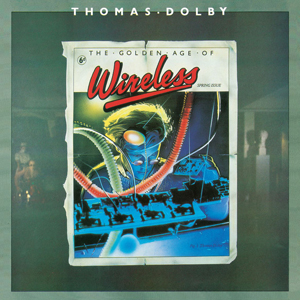 Thomas Dolby: Yeah, I’ve visited many times over the years. One of my favorite things to do is go sailing on the lake. I’m a very keen sailor. I’ve gone off and just put a note out on social media saying, “Who’s taking me sailing on my day off?” and I’ve had some great experiences like that.
What’s on deck for the House Of Blues?
Dolby: I’m working on a big show that I’m going to premiere at the end of this year or the beginning of next, which is a symphony. I’ve written a symphony about the ‘80s. It is my journey through the ‘80s, my music and the music of other people that have influenced me, linked together by symphonic instrumentals, so using riffs and melodies from songs as sort of symphonic motifs, and telling stories as I go. I will be sharing some lead vocals with two of my band and the addition of a drummer. It’s a full band in front of an orchestra, although the orchestra will be virtual. I’m gonna be sort of workshopping the material, trying it out on audiences and streamlining it before it gets anywhere near an expensive symphony orchestra.
Tell us a bit about the band you’re bringing.
Dolby: Gail Ann Dorsey will be on bass and vocals. We first met on stage with Bowie, actually, around 2000. She was a side musician for him for many years and I got back in touch with her when I was putting this together, because in my ‘80s show, I need somebody to cover people like Annie Lennox, Alison Moyet and so on. Then, Andrew Lipke is a guitarist and multi-instrumentalist from up the road in Philadelphia. He’s done a lot of orchestral hybrid shows before. He’s trained as a classical orchestrator and conductor, and he’s helped me with the orchestrations. He’s a great singer and guitarist as well. The drummer is Mat Hector. He’s played with me on and off over the years, but most recently, spent quite a long spell with Iggy Pop and Thom Yorke of Radiohead, as well as KT Tunstall and Soft Cell, and that’s our band. [Dolby will be backed by The Lost Toy People at RiverEdge Park for a festival-length set].
What qualities stood out best from the 1980s and was there anything that didn’t work out?
Dolby: There’s a lot that didn’t work out. It was quite a dark decay. We had [Prime Minister Margaret] Thatcher, you had [President Ronald] Reagan. We had the Falklands [War]. There was corporate greed. There was the Cold War against Russia in the East. By today’s standards, of course, it was fairly tepid, but if you were there and you lived through it, it wasn’t all about orange leg warmers and “Girls Just Want To Have Fun.” It was also quite a dark period and I think the indie music from the U.K. really expressed that via people like The Cure, The Smiths, Siouxsie And The Banshees, Echo & The Bunnymen, Depeche Mode and so on.
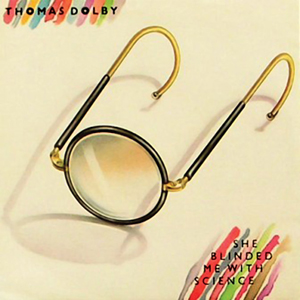 What’s your relationship like with “She Blinded Me With Science” these days and has it changed at all over the years?
Dolby: It’s a pretty evergreen song, crops up in a lot of different places year in and year out, and it’s always a surprise. It’s a surprise when it shows up in “Breaking Bad” or “The Big Bang Theory,” but audiences still like hearing the stories behind it, and I think if you’re gonna have a song that they’re not gonna let you leave the building unless you play it, I’d rather “She Blinded Me With Science” than “My Ding-A-Ling.”
Why do you think its music video made such a tremendous impact on MTV?
Dolby: It was the very early days for MTV and nobody really figured out what the genre was capable of. I was always a big fan of silent movies, Harold Lloyd, Buster Keaton and Charlie Chaplin. Those guys were sort of the underdog who evaded the bully and got the girl in the end by being sweet. That was kind of my way to get girls, versus loafing around on the deck on a yacht in Sri Lanka in a custom suit.
From your season as a session man, who are a few of your standout appearances and why?
Dolby: I think of Foreigner. I was actually down on my luck, living in Paris, working as a street musician strumming [Bob] Dylan songs for Japanese tourists. I got a call from [guitarist/co-songwriter] Mick Jones asking if I would come to New York and if I could create a lush synth intro for this new power ballad, which turned out to be “Waiting For A Girl Like You.” I ended up spending a month there and doing the whole album, and it was very successful. The other end of the spectrum, towards the end of the ‘80s, I was living in Hollywood. A friend of mine was producing Belinda Carlisle and wondered if I would put some synth down on “Heaven Is A Place On Earth.” There was a new synth that had just come out called the Roland D-50. I said, “Well, if you buy me one, I’ll put it on your record, but then I’m taking it home with me.”
How did you wind up as a producer and what are your reflections on those encounters?
Dolby: There’s an amazing British band called Prefab Sprout that are only known to a cool minority over here, but the first album I produced for another artist was for them and that I think came about cause I gave them a nice review on the radio. They were listening in, and they called up and [asked if I wanted] to listen to the demos that they had lined up for their upcoming album. One thing led to another, and I ended up doing two-and-a-half albums with Prefab Sprout. I loved them dearly next to my own music. It’s very, very precious.
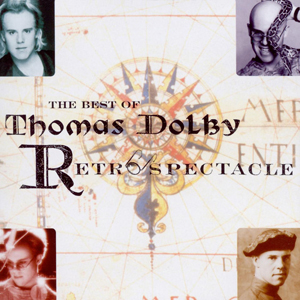 George Clinton was actually on the same “Saturday Night Live” as me and turned out to really like my music. A few days later, he was doing a James Brown testimonial concert, and asked me to come on stage and sing [“Get Up (I Feel Like Being A)] Sex Machine.” It was a big auditorium. I was about one of three white guys in the place and stumbled on stage, and there in the front row was James sort of scowling at me, so I put on my best Oxford accent and gave it my all. Subsequent to that, George invited me to go down to Miami and co-produce an album, [“Some Of My Best Jokes Are Friends,”] with him.
You also appeared alongside two of the most legendary artists ever at a pair of equally iconic concerts. What do you recall about being with David Bowie at Live Aid and Roger Waters for “The Wall”?
Dolby: They were very, very different. Roger is a control freak who needs to have a hand in everything. That show involved pyrotechnics, a documentary film crew, the Scorpions on their motorbikes, and a cast of superstars from the stage and from the screen in front of 350,000 people on a former bomb site on the Potsdamer Platz in Berlin. I had to hang from “The Wall,” 30-feet up in a suit that had 15-foot long arms and legs. I was the puppet in that, and then I came out and did a synth duet with Cyndi Lauper, so that was certainly quite an experience.
David Bowie was quite the opposite. He would just walk into the middle of the room and exude wonderfulness, and a whole generation of musicians that had grown up with his music, we knew every note and he kept changing his mind about what songs to do right up until the last minute. Standing at the side of the stage, he jabbed me in the ribs and said, “Hey Tom, let’s start with ‘TVC 15,’” which unfortunately, was a honky-tonk piano intro, which is not exactly my style and a little bit intimidating in front of 100,000 people, but it just sort of flowed out of us and it was quite a transcendental experience.
The Grammy Awards ranked right up there when you collaborated with fellow keyboardists Stevie Wonder, Herbie Hancock and Howard Jones. How were you able to merge all your different styles and eras together for that unforgettable performance?
Dolby: It was complicated because they wanted us to do a medley of one song from each of us and then finish out with “The National Anthem.” The medley part went quite well, but at two in the morning before the show, we still hadn’t figured out how to do “The National Anthem.” I remember we were at Stevie Wonder’s studios, which is in this cavernous, former art deco cinema in L.A., and Stevie has gone AWOL, and we need to get it done to get some sleep before the dress rehearsal. I went and searched for Stevie, and I found him alone in a broom closest that had a piano in it just playing some blues.
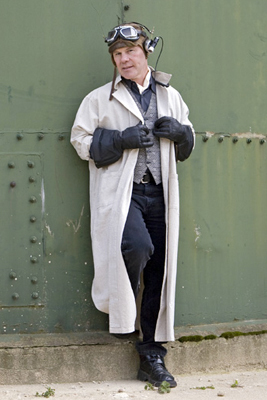 I said, “What are we gonna do about this ‘National Anthem’?” He said, “What do you think?” And I said, “I was thinking kind of a slow, sexy groove.” He said “Ah, that would be a bad idea man.” I said “Why is that?” And he said, “because Marvin [Gaye] did that at a basketball final. He just went out on the court with like a drum machine and his voice. Marvin never got on TV again until the day he died because the networks couldn’t handle a Black man doing a sexy version of ‘The National Anthem’ at that point.” And I said, “Oh, okay, wow, that’s pretty intense. It must have sounded amazing though. What did he do?” And without missing a beat, Stevie started beatboxing, and started on the piano and vocal channeling his memory of Marvin’s performance. I was the only one in the room and I was just absolutely breathless. Then he got up and just felt his way out of the room very nonchalantly.
Years later, thanks to YouTube, somebody said, “Oh yeah, you can see that performance on YouTube,” so I looked it up. I’ve told that story for years, but I never actually heard what Marvin did…Well, we got it figured out in the end. It was more of an up-tempo version of it. We got it done, but we mimed to it on TV, which is what they wanted, so I was able to ham it up a little bit dressed as Ludwig Van Beethoven.
What made you want to make the leap from music into the world of tech?
Dolby: I loved to dive headlong into new technologies, and figure out what it’s limits are and what I could do with it creatively. I was using these software programs. I had a relationship with the companies where I would make suggestions, and eventually, I ended up consulting with them and they started incorporating my ideas into their software. At that point, I was hooked. I loved being in the power seat where you could dictate the next generation of technology. It was at a time when people were investing left, right and center in the internet, and all sorts of wacky ideas, so I said, “Why not music on the internet?” So I got a company funded and got some really brilliant programmers in. We made amazing stuff for a number of years that had millions of downloads, made people very happy and made zero billion dollars. Like many internet companies, we would have gone up in smoke at the end of the decade had it not been for one deal that we had, which was to make the ringtone engine that goes in Nokia cell phones. Nokia had licensed our technology off us and put it in about two or three billion phones that they shipped, so when you heard that polyphonic ring tone, the Nokia sound, it was coming out of Beatnik technology.
Where did the movie and video game soundtracks fit into all of this?
Dolby: I love the way you apply music to a number of different concepts. It’s not all about me, the artist or my brand. It’s about communicating to a team that are creating something on a larger scale. I’d always fancied doing film soundtracks and did a couple of them, a sort of mixed experience because you have so little control over the quality of the output, but the music, I think, was good. Ditto with video games. I was just fascinated by how you do music interactively in a situation where it’s really the user that is dictating the tempo and not some film director.
 Is there anything you would you like listeners to learn about Thomas Dolby?
Dolby: Yeah, I’m a professor of music at John Hopkins University. I’ve been doing that for about ten years. I started a program to pass on my knowledge and experience to a future of generation of musicians and composers. I enjoy teaching. I’m from a family of teachers. My dad was an Oxford professor. My mom taught algebra and most of my siblings, same deal, so it’s an opportunity to give something back. My students keep me in touch with what’s going on in the world…
How would you describe the students of today and their creative pursuits?
Dolby: There’s actually a much better career path for those composers than there would’ve been in previous decades for a couple of reasons. Number one, the amount of prestige TV and indie movies that are being made, many of which need soundtracks, sometimes orchestral soundtracks, coupled with the fact that on their computers, they can make the sound of an orchestra if they want to or an incredible sort of cinematic landscape with a synth sound. Students want to learn that when they’re 18, not when they’re in their mid-20s. Many of them of first dipped their toes in during COVID when they were stuck at home and experimented with new software. Many of them are video game fans. They don’t really pay much attention to film and TV. Really what they want to do is make their own soundtracks for the video games that they love.
When I was there age, I had no mentor to explain to me about the industry, about how it worked and what it means to have a client. I just sort of thought, “The brilliance of the music would be enough to make people keep coming back.” But in reality, I didn’t fully understand as a member of the team, you have to be accountable to your boss, who is the director, or the showrunner, or the game designer, or whoever it is, and be respectful of all the other people on your team. Everybody’s on a schedule, and if you make them look bad by missing a deadline or something like that, then they’re never gonna forget it. I really make sure that my students are well-versed, professional, [have] etiquette and accountability, and hopefully, put them on a good path to a future successful career in music.
Thomas Dolby performs at the House Of Blues on Monday, April 20 and RiverEdge Park on Sunday, August 16. For additional details, visit ThomasDolby.com, HouseOfBluesChicago.com and ParamountAurora.com/RiverEdge/.
Related Articles
 Thompson Twins’ Tom Bailey dives “Into The Gap,” Thomas Dolby blinds HOB with science
 “Things Can Only Get Better” when synth-pop pioneer Howard Jones joins ABC at the Genesee
 The synths of Howard Jones’ “Everlasting Love” and ABC’s “Poison Arrow” pierce the Genesee
 Curt Smith reveals how Tinley Park-prepping Tears For Fears reached “The Tipping Point”
 Kraftwerk adapts a “Multimedia,” electro approach to “Autobahn” onward at Auditorium
 Pet Shop Boys, New Order attain “Unity” while turning Huntington Bank Pavilion into a dance floor
 Was (Not Was) co-founder, Wolf Bro, A-list producer Don Was introducing Pan-Detroit Ensemble to Space
 Duran Duran’s fab “Future Past” 40th, Bastille’s “Bad Blood” and Chic’s “Good Times” fill Northerly