
“Love Plus One” when London’s Haircut 100 joins Howard Jones in rare Rivers Casino return
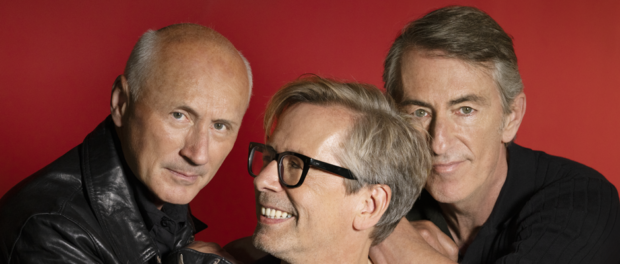 Photo provided by Greg Gorman
The initial incarnation of England’s Haircut 100 was relatively short but extremely impactful, thanks primarily to the landmark “Pelican West” project that brought sophisticated jazz and funk flavors to the new wave scene of the early 1980s.
Though members went on to a variety of major undertakings ever since, a 40th anniversary of the project that birthed the MTV-friendly singles “Love Plus One,” “Love Plus One,” “Favourite Shirts (Boy Meets Girl)” and “Fantastic Day” finally brought them back together.
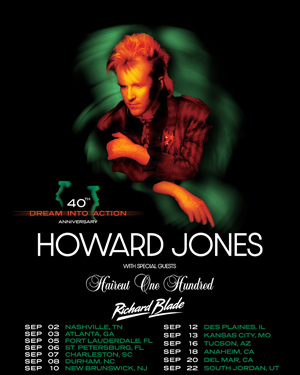
In fact, a pairing with fellow scene shaper Howard Jones marks their first American shows in just as long, leading Chicago Concert Reviews to connect with front man Nick Heyward to hear all about the circumstances surrounding an extremely rare Rivers Casino return on Friday, September 12, which has thus far seen some seated resale tickets reaching nearly a thousand dollars!
What can concertgoers expect from your upcoming dates alongside Howard Jones?
 Nick Heyward: A selection of songs from “Pelican West,” but with decades of live experience behind us. Our live shows are another experience entirely and are a celebration of musicianship, the joy of life, of being alive and living life to the full. We aim for the hips and you’ve got to get up and dance. With your hands, hair, eyes, ears, heart, anything. It’s a life-affirming experience for us and we’re feeling the music. In many ways, we are the these songs and they’re just a joy to play.
It’s been 40-plus years since you last came to Chicago. What do you remember about previously playing around town?
Heyward: I have a vivid memory of me and Jonesy going to a gig in Chicago during the first Haircut 100 tour of the U.S. in 1982. We went to a club to see a slightly punk-ish female band and part of what they did was to find bones on stage. They would say, “We are the bone finders” and they went off to hunt for bones, but there weren’t any, so they were just acting it out. I’d never seen anything like it and thought it was absolutely fascinating. I think it was the art scene at the beginning of the ‘80s, in many ways, that set up the alternative scene that was blossoming at that particular time. You could be as creative as you wanted and there was no barriers at all. Chicago felt really ahead of its time culturally.
How would you describe your relationship with America in general?
Heyward: I love it here and the American culture has been a huge influence. In many ways, I see myself and the band as Anglo-American. Living in South London in the late 1970s, you never thought it was possible to go to America. It was a pipe dream. And then we found ourselves here, seeing the landmarks, the Gramercy Park Hotel, The Ritz, playing with Grandmaster Flash…I just feel like I become a slightly bit more manlier here. Voice drops a bit as soon as I land, you know? Ha!
What are your thoughts on making such a major mark during the days of MTV?
Heyward: Being part of the new wave culture and MTV is like being a champion surfer. It’s still a thrill to reflect on. We really didn’t see it coming and I’m glad we made a mark in America because it’s that thing we were aspiring to. I’ve been stopped in customs a few times, and as soon as I say I was on MTV, “American Bandstand” or “Solid Gold,” it’s like I get a high five from the customs guys.
What was it about “Pelican West” in particular that made it stand out from the pack?
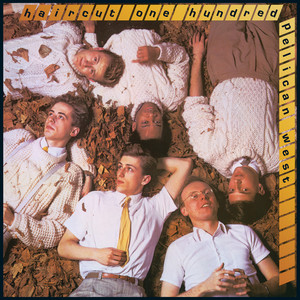 Heyward: I think it’s because it’s eclectic. It’s enthusiastic, and recorded completely live and it had elements of all of our influences up until that point – The Clash, Talking Heads, XTC, Tower Of Power, Earth Wind & Fire, The Beatles. Producer Bob Sargeant’s prog background was an also influence. He also made all The Beat records, like “Mirror in the Bathroom,” and that’s there as well. Our engineer, Mark Dearnley, had just come off AC/DC’s “For Those About To Rock” and that’s why the snare sound is so good on “Love Plus One.” He used the same tricks he used on that album to make the sound fatter. The influences are all in there.
“Love Plus One” is one of your most iconic tracks. What are some of the most exciting ways it’s experienced resurgences since it was released?
Heyward: Someone said to me, “Your song is in the movie ‘Se7en’.” I thought Brad Pitt. Fantastic. Gwyneth Paltrow, Morgan Freeman. Fabulous. When I went to see it, I was waiting for it at every particular point, thinking “Are they going to be cleaning up a body or something? How’s that going to work?” It actually came on in a cafe when Gwyneth met up with Morgan and I thought, “That’s about right for ‘Love Plus One’.” It would happen. It’s one of those songs that’s just there in the background. It’s pretty amazing to know that you’re part of the cultural fabric.
What do you consider to be a few of the the band’s other most historic moments in your short yet substantial time together?
Heyward: Playing the Country Club in L.A. with Raphael Ravenscroft was a “pinch-me” moment. He played that iconic sax on Gerry Rafferty’s “Baker Street.” During punk, I was working in an art studio and walked up and down “Baker Street” regularly to deliver art. That song was everywhere. It would be playing in shops when you walked down the road. It was on the radio in the art studio. And if someone had said to me in four years time, “you’re going to be on stage in Los Angeles and Ralph Ravenscroft is going to be jamming with you on ‘Fantastic Day’,” I would never have believed it.
Who would you say were some of your closest peers were along the way?
Heyward: We were surfing the same way wave as ABC, Funkapolitan, Blue Rondo à la Turk, Pigbag and Spandau Ballet because of “Chant No. 1.” Everybody in London clubs at that particular point was dancing. There was a funk wave in town and we were part of that. When we came to America, we were part of a completely different wave, the new British Invasion with Squeeze, OMD and The Human League. It felt instantly, completely different, because you’d never group us together in the U.K., but then suddenly we had solidarity with all these other bands.
Can you tell us a bit about what all the members were up to during the periods when you weren’t together?
 Heyward: Our drummer, Blair Cunningham, went on to play with Sade, The Pretenders, Echo & The Bunnyman, and then he joined Paul McCartney’s band for 10 years. Percussionist Marc Fox moved into the business side, and worked for RCA and Zomba on the publishing side, and then in A&R. He signed Natalie Imbruglia and put together her song “Torn.” Phil Smith, our brilliant sax player, did loads of sessions in around London and played with Lenny Henry, The Pasadenas and did lots of work with me. Bassist Les Nemes did loads of session work and toured with Rick Astley before moving to Spain. Our guitarist, Graham Jones, was in a fantastic band called Boys Wonder after Haircut. They’re so good, you’ve got to check them out. And I became a singer/songwriter and worked with [The Beatles’ engineer] Geoff Emerick to make “North Of A Miracle.” I’ve been making albums and touring ever since.
What ultimately led you to reunite?
Heyward: It was the 40th anniversary reissue of “Pelican West,” released by Demon Records, that was the catalyst. It opened the door to show at Shepherd’s Bush Empire that sold out in five minutes, which then led to being invited to do a session for the BBC Radio 2 “Piano Room” with the BBC Concert Orchestra and fantastic management getting involved.
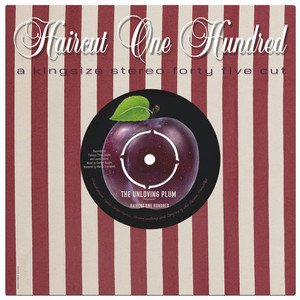
How would you describe your current sound on the single “The Unloving Plum” and the upcoming album?
Heyward: We’re wearing our influences on our sleeves now. In the period around “Pelican West,” I couldn’t say that I loved Montrose or that I stood in my room listening to The Tubes “White Punks On Dope” and just felt transported to another world. But now, it’s all there. All of our influences are there, whether it’s Frank Zappa, early Chicago, Average White Band, maybe even have a bit of Jonesey’s surf pop. Anything goes now.
What are your hopes for this next chapter of Haircut 100?
Heyward: That we continue to make great music together. I saw [The Beatles’] “Get Back” during COVID. It dawned on me that all you have to do is just turn up to the studio. If you don’t, then it doesn’t happen. It’s a simple as that.
Haircut 100 performs at The Event Center At Rivers Casino Des Plaines on Friday, September 12. For additional details, visit Haircut100.com and RiversCasino.com.
Related Articles
 Rivers Casino relishes 40th anniversary of Howard Jones’ “Dream,” Haircut 100 in America
 “Things Can Only Get Better” when synth-pop pioneer Howard Jones joins ABC at the Genesee
 Was (Not Was) co-founder, Wolf Bro, A-list producer Don Was introducing Pan-Detroit Ensemble to Space
 The synths of Howard Jones’ “Everlasting Love” and ABC’s “Poison Arrow” pierce the Genesee
 Voices Of Rock Radio to rev up responsibly at Jamie’s Outpost
 A full Ravinia season stacked with Diana Ross, Sting, Pitbull, Stevie Nicks, The Black Crowes
 Percussion queen Sheila E. & The E-Train bringing “The Glamorous Life” to City Winery
 Ravinia reveal wows with debuts of Lionel, Lady A., Morrissey, Queen Latifah, favs galore